Cooking Class in Lembeh: An Authentic Taste of Indonesian Cuisine
The world’s largest archipelago, Indonesia is home to over 17,000 islands and 280 million people who speak 700 distinct languages. In this cultural melting pot, food brings everyone together. Indonesian cuisine blends fresh and colorful ingredients with traditional knowledge to make a dazzling array of dishes; when you travel to Lembeh, you’ll discover the food is just as diverse as the diving, and as unforgettable as the nation itself.
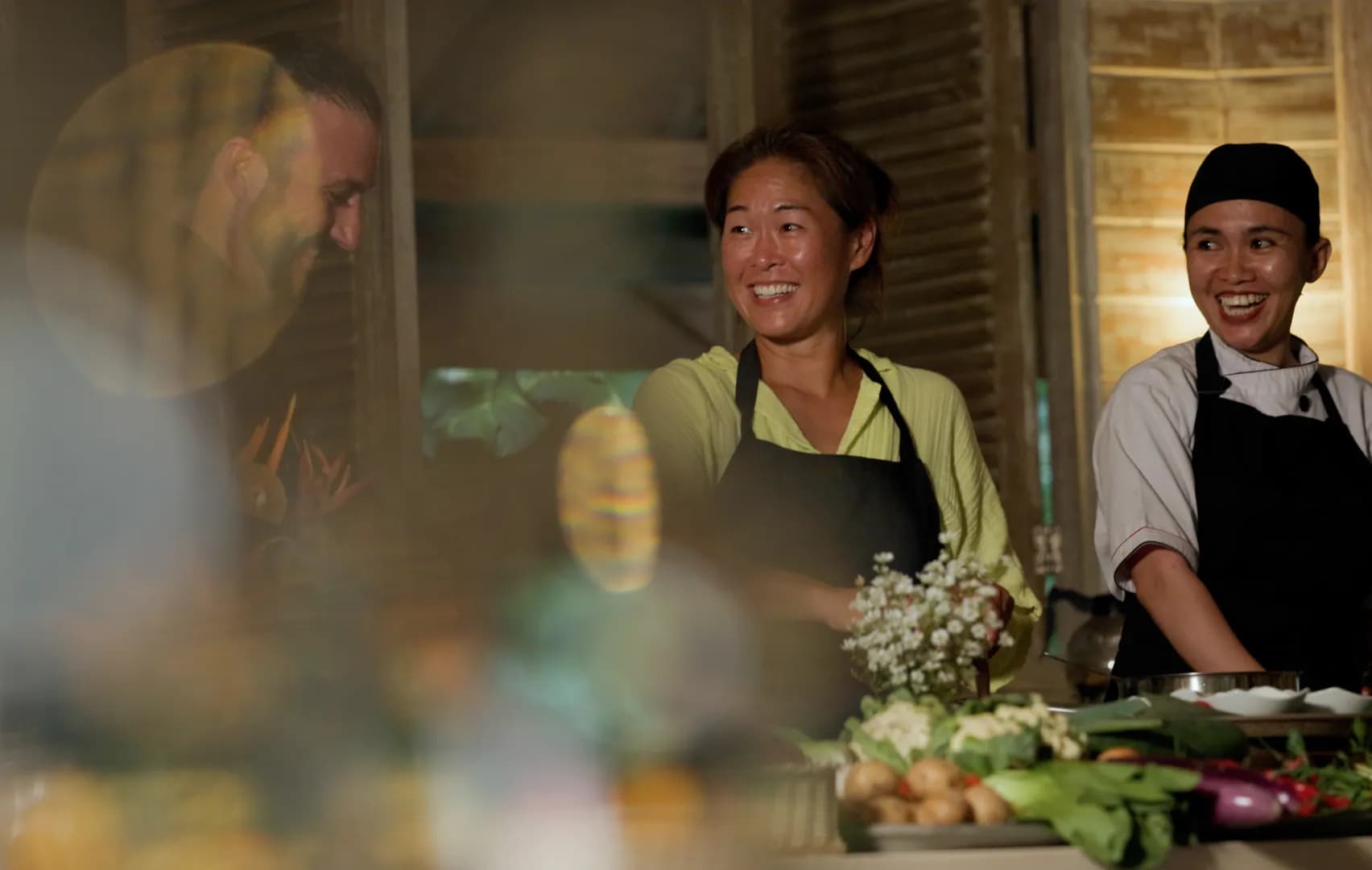
Best of all, Indonesian recipes are not closely guarded secrets – chefs here are proud to share their creations with the world. At Lembeh Resort, our team of culinary creators are only too happy to share their kitchen secrets with guests, especially during our bespoke cooking classes.
In this blog, our kitchen team shares one of their favorite recipes – chicken woku – showing you how to make authentic Indonesian food in your own kitchen. So, if you’ve ever wondered how Indonesian cuisine is created, it’s time for your first cooking class in Lembeh.
Let’s dive in..
An Introduction to Chicken Woku
First up, let’s learn a little more about the dish we’re going to create today.
Chicken woku (or ayam woku) is a traditional dish from Manado in North Sulawesi. Made with tender pieces of marinated chicken cooked in a rich mix of herbs and spices (bumbu), the dish takes its name from a type of palm leaf called ‘woka’ (Livistona altissima) which grows in Sulawesi. These leaves are also traditionally used as biodegradable food parcels, and are believed to give their contents added flavor.
Bumbu woku utilizes a complex mix of herbs to create an irresistibly fragrant dish. Tomato, lemongrass, and galangal create a fresh and aromatic base, while ginger and chilies dial up the heat. The result? An authentic taste of Manadonese cuisine.
Feeling hungry yet? Let’s get cooking.
Step One: Preparing the Ingredients
At the heart of every chicken woku dish is fresh, local ingredients. If possible, use fresh herbs and spices, rather than dried or powdered equivalents. At Lembeh Resort, we grow a range of fresh greens in our own leafy gardens, and source most other ingredients from the local market.
Remember: Wherever you are in the world, it’s always more environmentally friendly – and usually healthier – to shop local. Here’s what you will need to create your very own chicken woku dish, a la Lembeh Resort:
Ingredients
· Chicken thigh (250g)
· Large red chilies (50g)
· Garlic (50g)
· Onion (70g)
· Candlenut (30g)
· Shallots (70g)
· Spring onions (60g)
· Fresh turmeric (30g)
· Lime (1 pcs)
· Kaffir lime leaf (5g)
· Lemongrass (70g)
· Pandanus leaf (5g)
· Turmeric leaf (5g)
· Tomatoes (60g)
· Salt (2g)
· White pepper (2g)
· Fresh ginger (10g)
Equipment
· Ovenproof dish
· Frying pan
· 2x sharp knives
· 2x cutting boards
· Blender
· Oven
· Hob or stove
· Cooking oil (100ml)
Step Two: Marinade the Chicken
To gently season the meat, simply add a little salt and pepper. Then drizzle with olive oil and leave the chicken to marinade for a few minutes before cooking. Be sure to wash your hands thoroughly after handling the chicken, and use a different knife and chopping board for the vegetables.
Next, we’ll make the sauce; this is the essence of the dish, where all the flavors come together.
Step Three: Preparing the Sauce
First, cut a little bit of galangal and peel the fresh turmeric, taking it out of the skin. You’ll notice that fresh turmeric has a beautiful, natural orange color. Next, add a little bit of ginger. It has a strong taste, so you won’t need to use much (a piece as large as your fingertip should be enough).
Next, peel the garlic (around five cloves should be enough), onion, and shallots, and mix with the candlenut. Then, gently sauté the mixture to make a paste. Make sure none of the juice from the crushed garlic goes to waste, as this is what gives the sauce its distinctive flavor. Add the chopped chilies and a dash of lemongrass, and you have the foundation for your sauce.
Finally, use a blender to mix all your ingredients together with a little water. While the mix is blending, you can prepare a pan for the next stage.
Step Four: Cooking the Chicken
First, heat your pan with a little oil.
Next, we’re going to lightly pan-sear the chicken thigh until the skin begins to brown. Don't throw away the oil – this will add to the flavor of the sauce at the next step.
After that, place the chicken in the oven.
Step Five: Cooking the Sauce
While waiting for the chicken, you can begin to cook the sauce using the same pan you used for the chicken. Once you put the sauce in the pan, you’ll enjoy the sizzle of the ingredients as they heat up, and begin to smell those irresistible Indonesian aromas.
Slow cooking the sauce on a low heat will release the flavors from your ingredients, while also binding them together in your base. While the sauce is gently bubbling away, you can cut a little extra lemongrass, kaffir lime leaf, and galangal to add to the mix – this creates an extra layer of freshness and flavor.
After a few minutes, you’ll notice the color of the sauce begins to change, and separates from the oil. This is a sign the sauce is ready for your next step.
Step Six: Adding the Chicken
Once your chicken is cooked, you can combine it with the sauce. Add a little water and turn up the heat, stirring slowly as it comes to the boil. At this stage, you can also add a little extra seasoning – salt, pepper, and even just a pinch of sugar.
Once the sauce is heated, you can add the chicken to the pan. The juices from the chicken will begin to blend with the sauce to create a more rounded, succulent flavor.
Finally, cut some tomato, fresh basil leaves, and spring onion, then add to the pot – this will counter the heat of the spices and add one last flourish of freshness to your dish.
Finally: Serve
Plate your creation on a bed of fluffy jasmine rice and garnish with a few extra sprinkles of basil, or – for an extra touch of professional flair – cut a carrot and cucumber into a floret to accompany the side salad. And with that, your chicken woku creation is ready to enjoy. Bon appétit – or, as we say in Manado: “manjo makan!”
Hungry for more? You can follow a step-by-step video for this recipe in episode 10 of our Lembeh Learning Series on YouTube. Remember to like and subscribe for more updates, which cover everything from cooking classes and land tours to photography tips and creature features!
To learn more about cooking classes in Lembeh, please visit our website.