Buoyancy Tips for Underwater Photographers (From Beginner to Advanced)
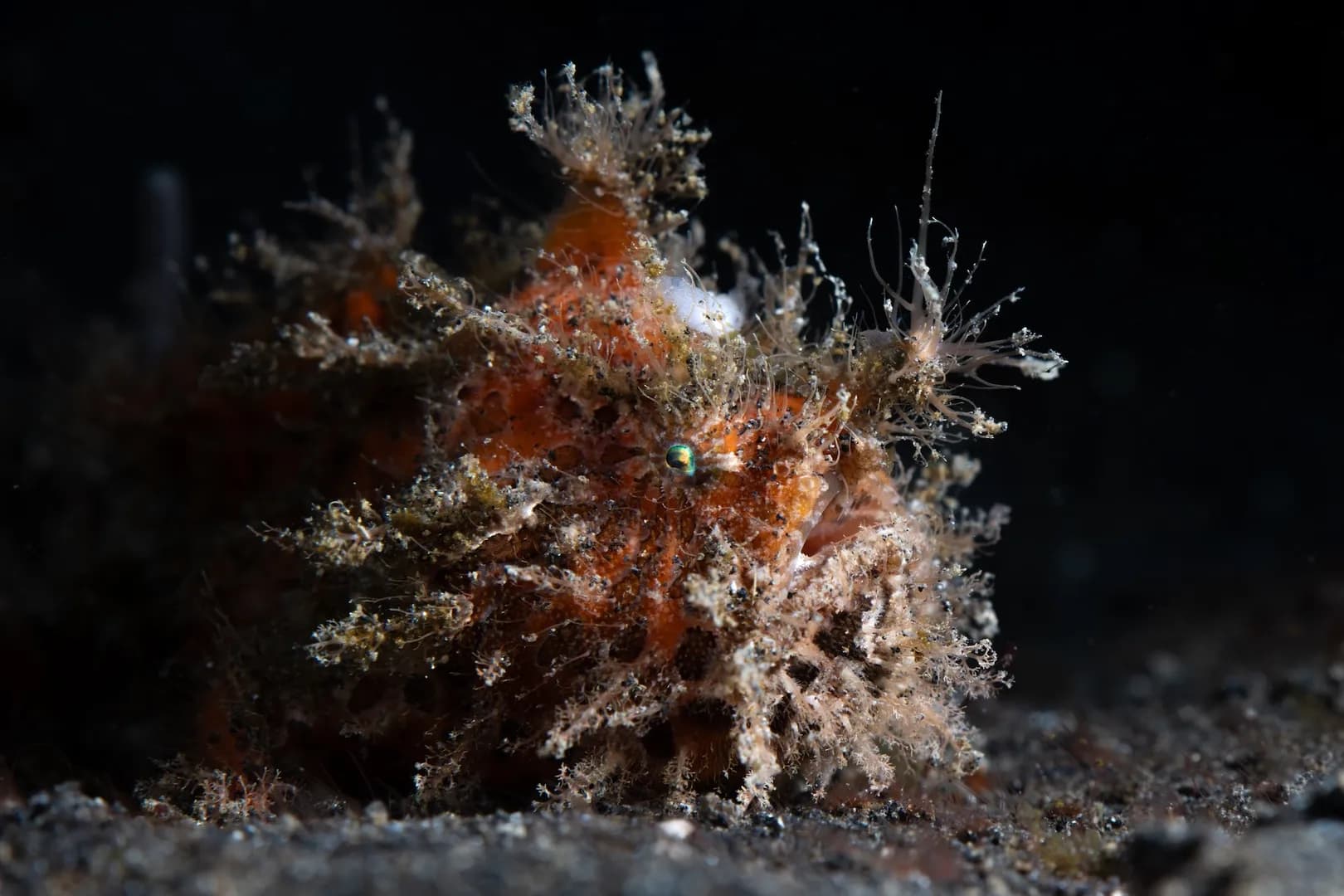
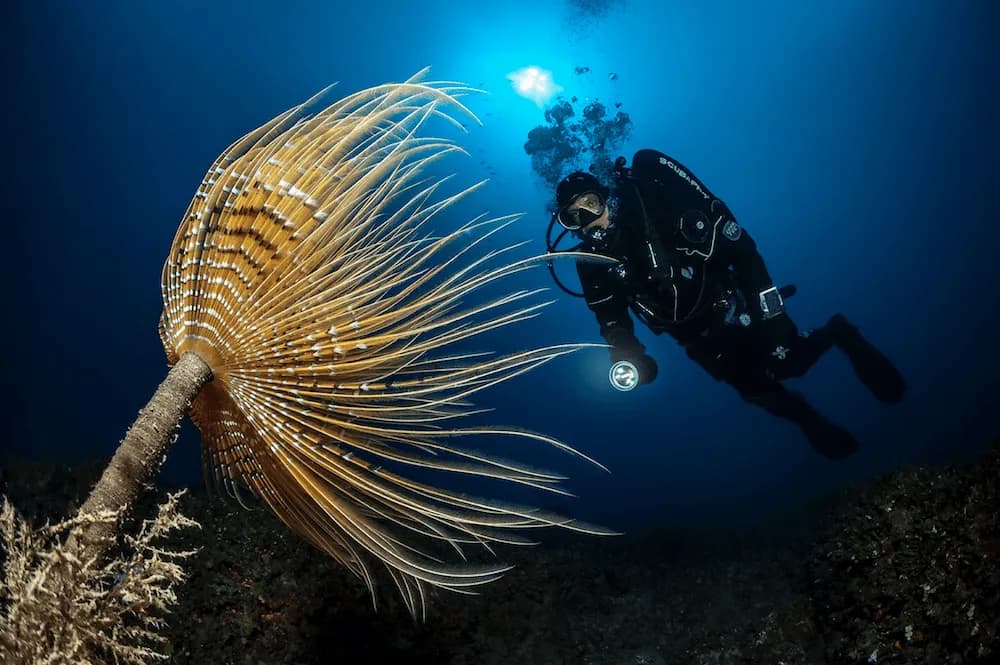
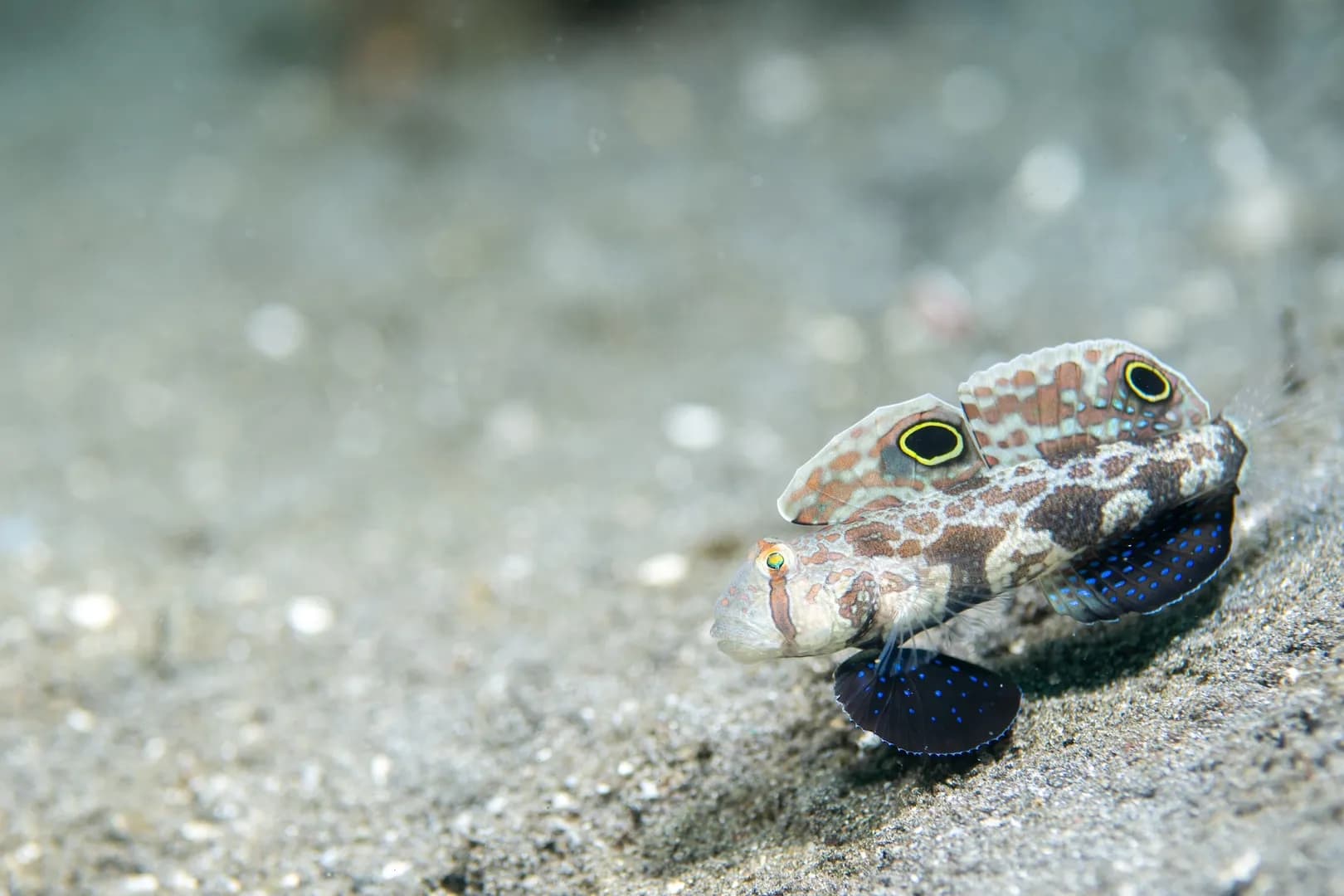
As one of the world’s premier muck diving sites, which supports an incredible diversity of critters, the Lembeh Strait is a paradise for underwater photographers. But the unique conditions can also be a new kind of challenge for those who are used to the less technical demands of coral reefs.
Lembeh’s fine muck sediment is easily disturbed by wayward fins; kicked-up substrate can hang in the water, reducing visibility and creating backscatter that ruins images. It can also disturb your subjects. That’s why buoyancy control is arguably the single most important skill for muck diving – and for underwater photographers in particular.
In this article, we outline a few practical buoyancy tips, starting with the fundamentals and progressing on to some more advanced techniques, all tailored to the realities of shooting in Lembeh. Let’s dive in!
1. Weights
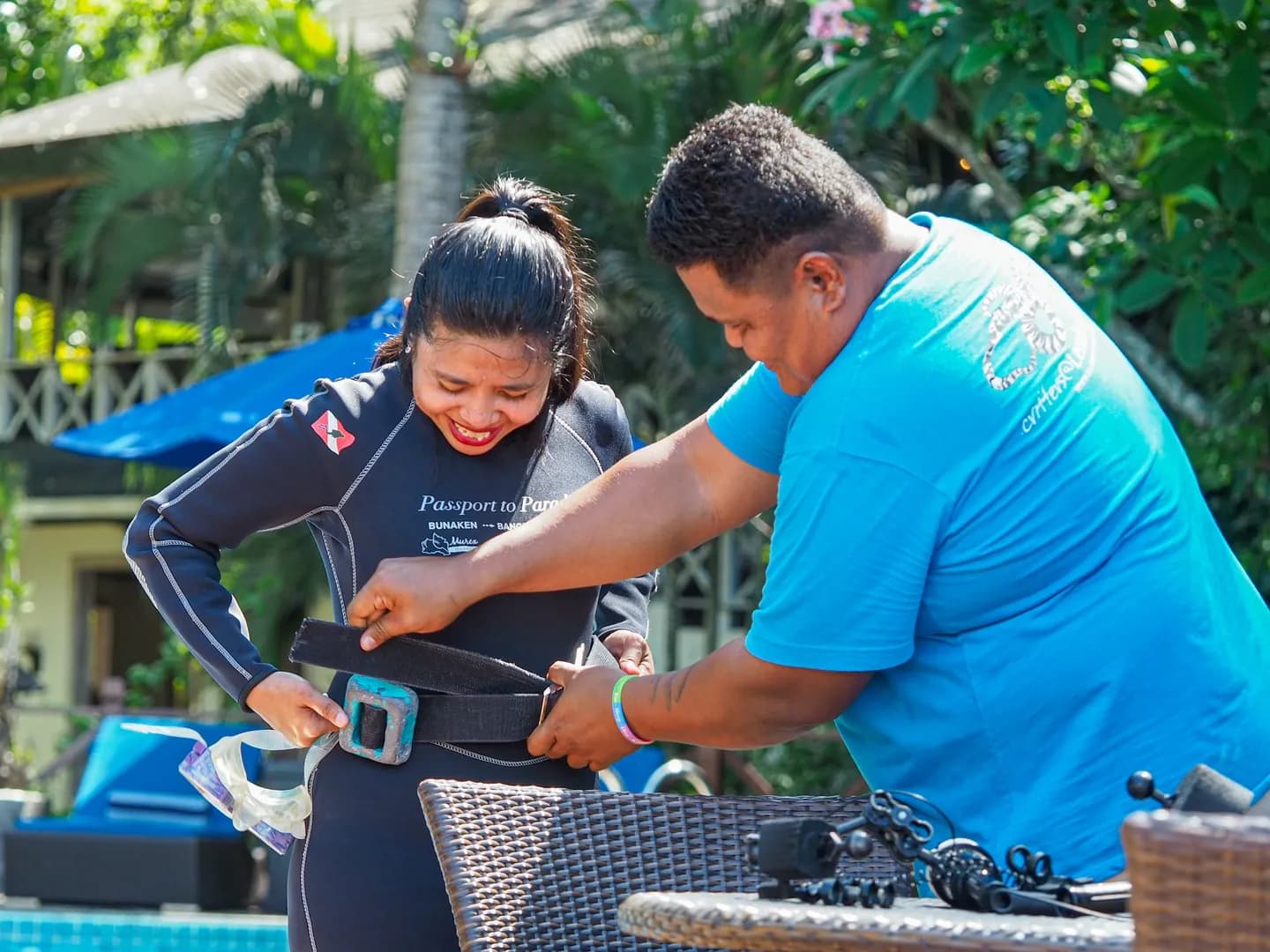
When it comes to buoyancy, this is the place to start. Even if you’re slightly overweighted, you’ll end up compensating by adding air to your BCD, which not only creates extra drag, but can also increase your breathing rate and pull your legs down (hello, silt cloud).
With an empty BCD and a normal breath, a correctly weighted diver should float at roughly eye level at the surface; when they exhale, they should slowly sink. You should also be able to hold a safety stop near the end of the dive with an empty BCD, accounting for the fact that your tank becomes more buoyant as it empties.
A reliable field check: at the end of a dive (around ~35 bar / 500 psi), you should be close to neutral at safety stop depth with little to no air in the BCD.
2. Trim
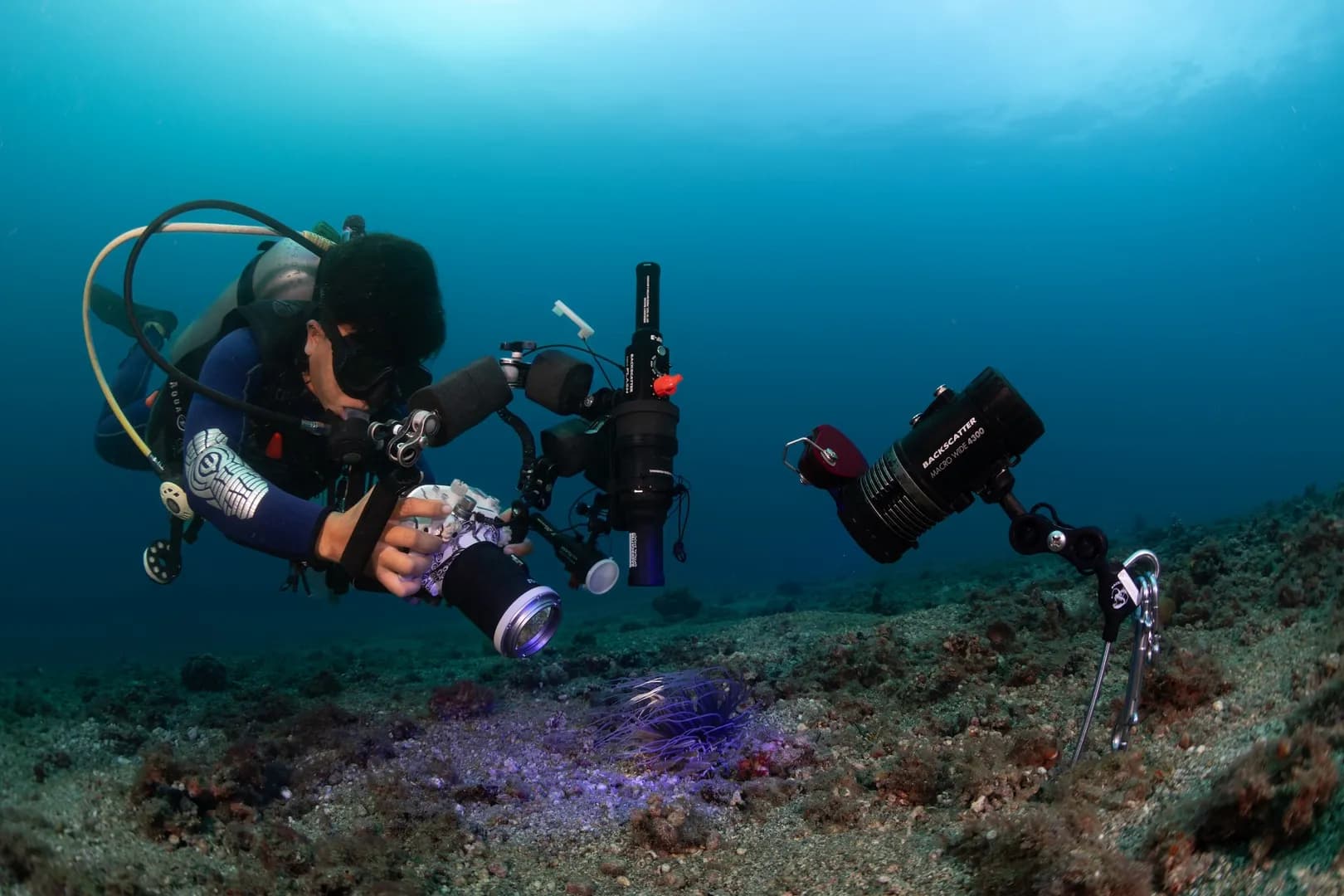
Neutral buoyancy is only half the story. Trim (your body position) is what keeps your fins from plowing into the bottom while you’re looking through a viewfinder.
Target posture for Lembeh muck sites:
- Torso and hips level, hovering parallel to the ocean floor
- Knees bent, fins up and behind you
- Camera held close to your centerline (not dangling below you)
Our top tip: At Lembeh Resort, we recommend bringing your fins up and behind you, and avoiding a traditional scissor kick that can stir sediment.
3. Breathing
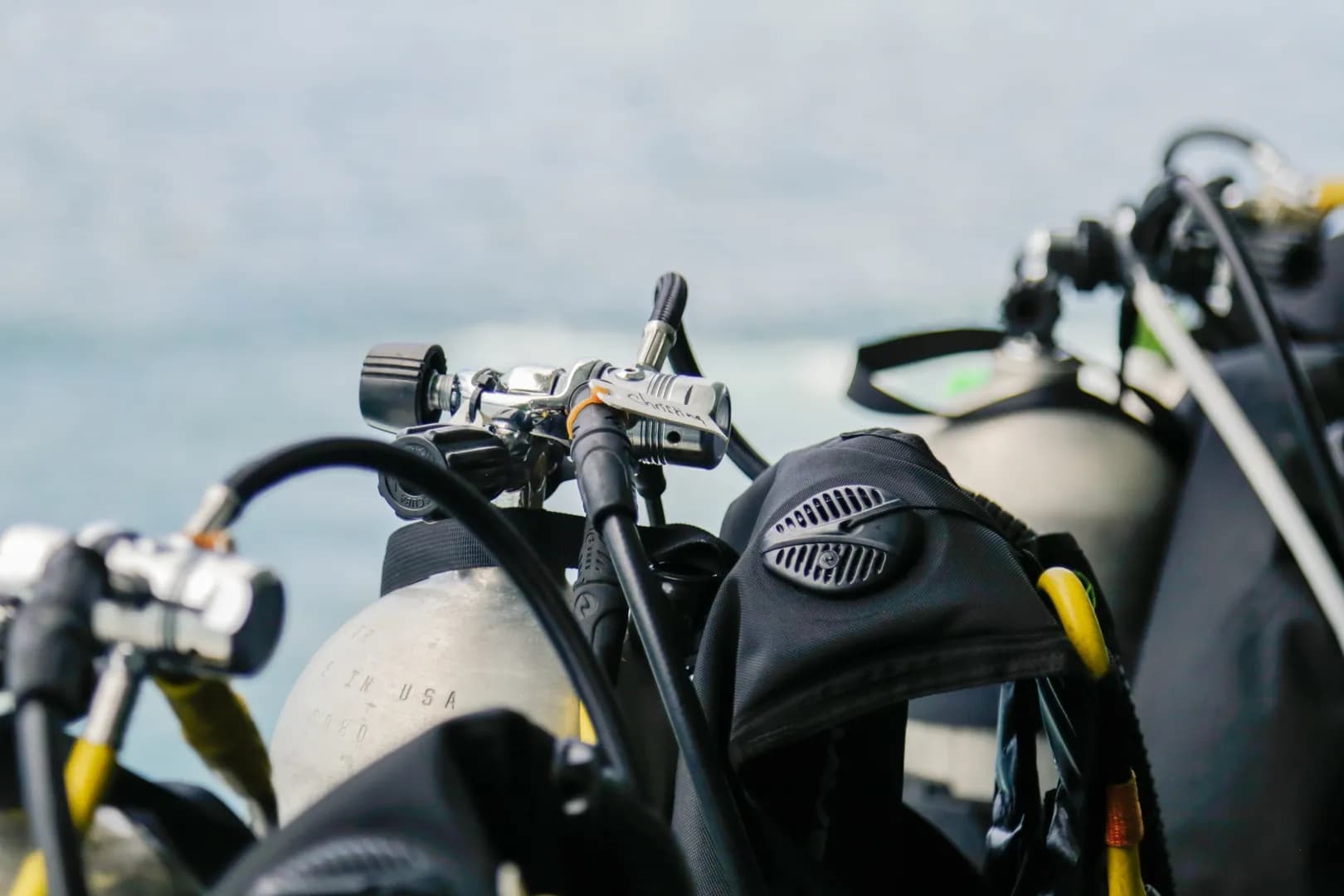
In underwater photography, you’re rarely making big depth changes; instead, you’re hovering, inching, and waiting. The most efficient control comes from breathing and stillness, not constant BCD tapping.
Try this drill on your next dive:
- Hover a meter above the bottom.
- Breathe normally and watch how a slightly deeper inhale lifts you, and a slightly longer exhale lowers you.
- Aim for small changes – think in inches, not feet.
This kind of ‘breath-led’ control is a core concept in buoyancy training and is routinely recommended alongside correct weighting and trim.
4. Finning
On muck diving sites, your fin motions can directly affect your visibility (and everyone else’s). Try these techniques to avoid fin faux pas:
Beginner: Frog kick
A frog kick pushes water backward, not downward, thereby reducing silt disturbance – and this is why it’s recommended for muck diving. At Lembeh Resort, we suggest mastering a ‘froggie-style’ kick, keeping fins up and behind you.
Intermediate: helicopter turns
When you’re framed up on a subject, you don’t want to scull wildly with your hands or fins to re-aim. Helicopter turns let you pivot in place with minimal disruption (and less camera shake).
Advanced: back kick (reverse without chaos)
The back kick is the ultimate pro move: You can back away from a subject or adjust your distance without turning around and silting everything up.
If you’re serious about advanced muck techniques, it’s worth brushing up on these techniques and practicing before you head out (we can help coach you in the pool or on our house reef if needed).
5. Camera
Buoyancy issues often show up the moment a diver adds a camera. More tasks means more stress, more fin movement and depth drift. Especially for new divers/photographers, we recommend you don’t bring a camera until you can complete complex tasks underwater without losing buoyancy control.
Make it easy on yourself
- Pre-set exposure basics on the boat (mode, starting aperture/shutter/ISO, focus mode).
- Streamline hoses and accessories so nothing dangles into the muck.
- Use a secure lanyard – losing grip shouldn’t mean dropping a rig onto the bottom.
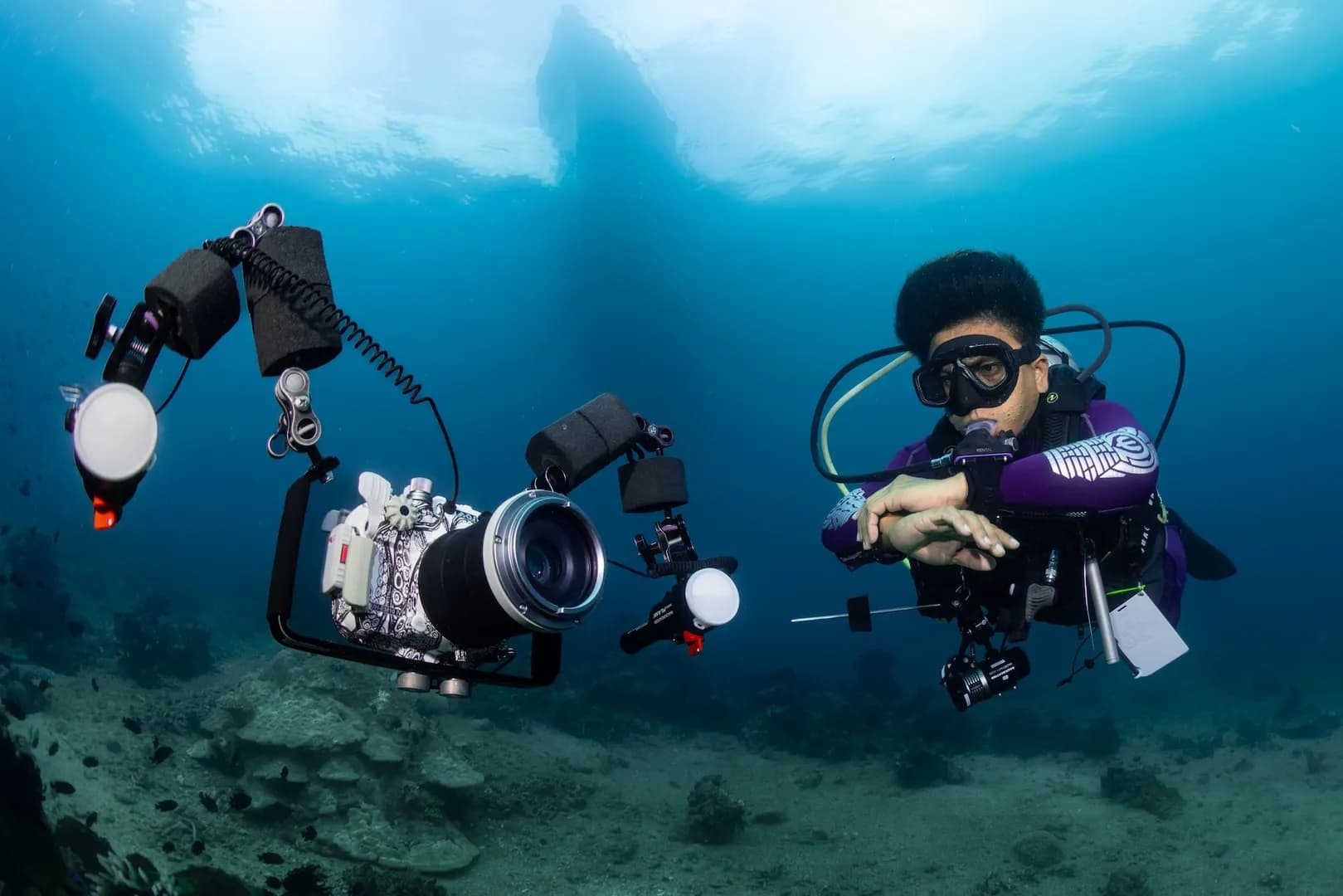
6. Rig
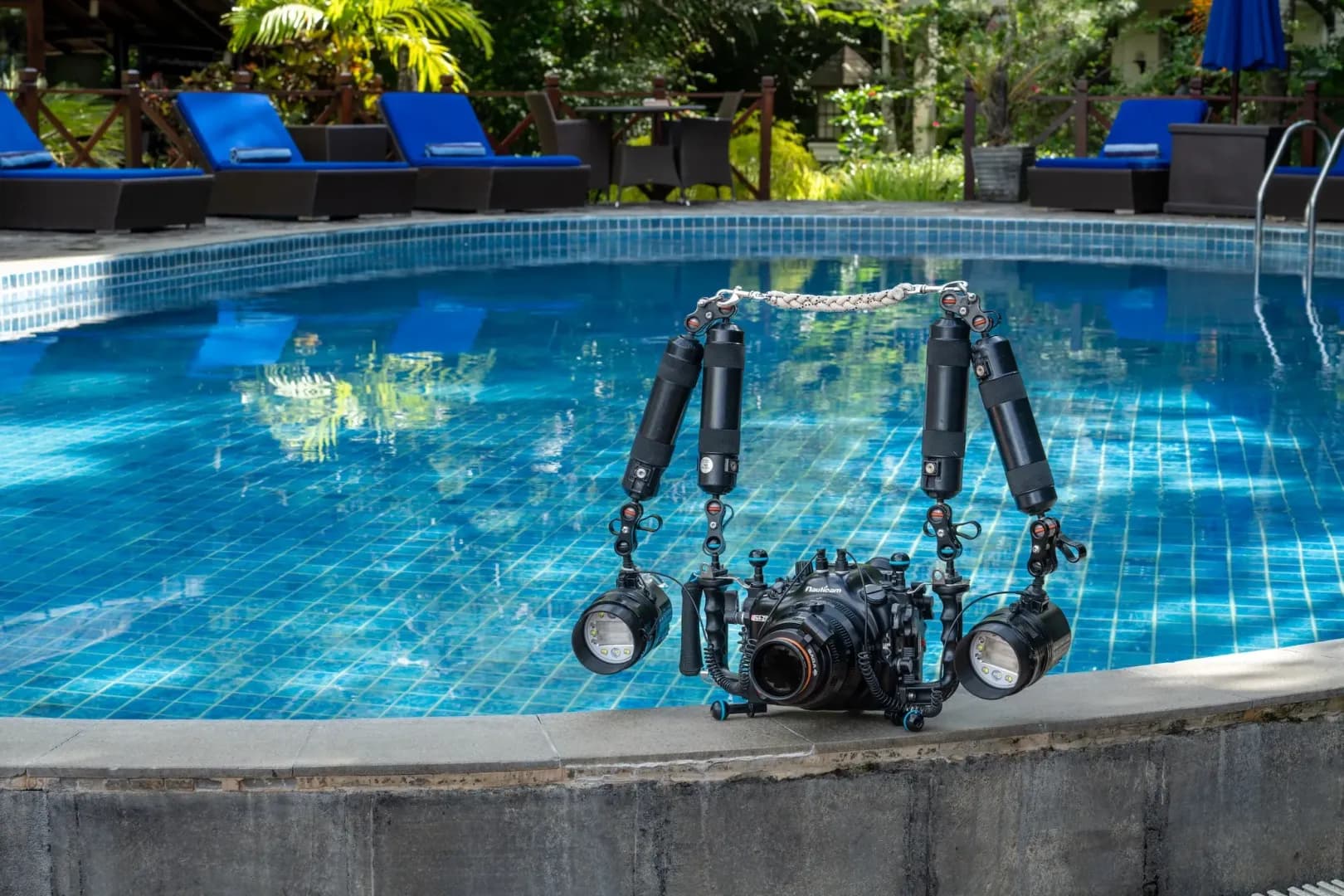
A heavy camera setup pulls you out of trim and increases fatigue, which makes buoyancy control harder. Many photographers use float arms or buoyancy collars to reduce in-water weight, aiming for a rig that’s close to neutral so it doesn’t fight your posture.
Why it matters:
- Less wrist/forearm strain during long macro sessions
- Fewer ‘micro yanks’ on the rig means less camera shake
- Easier to hold position while adjusting settings
If you’re unsure what’s right for your setup, this is exactly where in-resort photo support makes a difference – especially if you’re changing lenses between dives.
7. Stability
In the excitement of encountering a special subject (there’s plenty of them in Lembeh), it’s easy to forget your surroundings. But remember – contact causes damage and/or disruption, and on muck it also creates the backscatter that kills your shot.
Our top tip: If you’re close enough to touch the bottom ‘by accident,’ you’re probably too close. Maintain buoyancy, avoid touching the substrate, and don’t manipulate wildlife for a photo – generally the animals (including corals) here are small and delicate, so can be easily damaged by careless divers; some creatures have venomous stings or could otherwise cause injury when threatened. For all these reasons, it is not advisable to make contact.
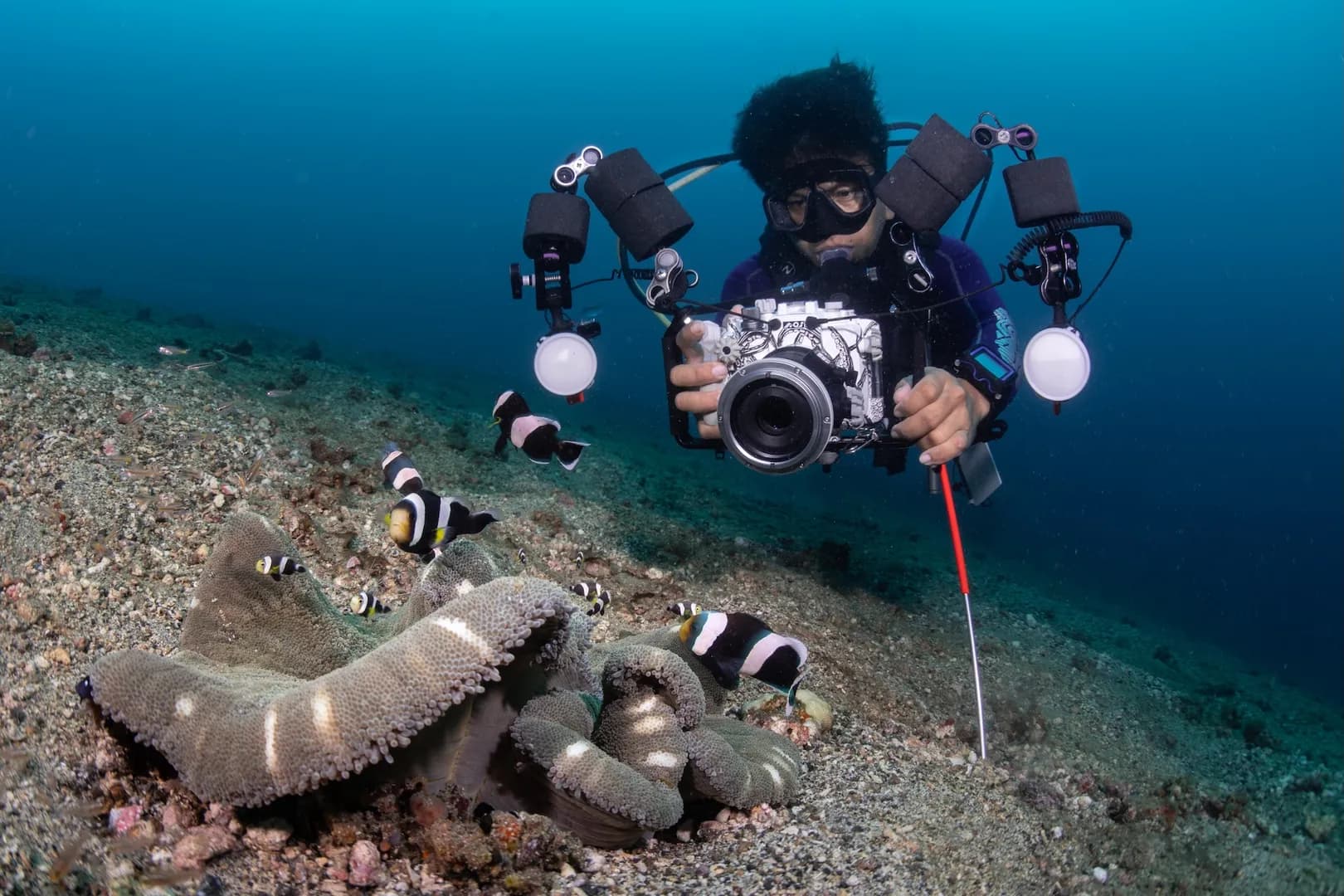
Muck photography rewards stillness. Move slowly and deliberately, be patient, and allow animals to display natural behavior – this improves both ethics and image opportunities.
Practical technique:
- Stop early (before the subject), settle your buoyancy, then inch forward.
- Make camera adjustments after you stabilize, not while you’re still drifting.
- Pause between shots – many critters relax when the ‘big bubble machine’ settles down.
- Use a muck stick – at Lembeh Resort, we recommend the use of pointer sticks for stabilisation, for lower shots close to the seabed, or when close to a wall. This can help you avoid making unwanted contact, while also getting close to your subject and making only minimal, planned contact in a safe spot.
Our Top Tip: While waiting for your buddy to take their shots, make use of this time by adjusting your starting camera settings for the shot in mind; slow down your breathing and be prepared, so you are ready to go once it's your turn.
Skill Level Road Map (what to focus on next)
If you’re a beginner underwater photographer
- Do an end-of-dive weight check and remove unnecessary lead over a few dives
- Practice hovering without finning for 30–60 seconds at a time
- Learn frog kick fundamentals
If you’re intermediate
- Refine trim (flat body position; fins consistently up)
- Add helicopter turns for precise framing
- Get your rig closer to neutral buoyancy for stability and comfort
If you’re advanced
- Learn back kicks for ‘reverse parking’ away from the bottom
- Dial in buoyancy and lighting together (strobe positioning without drifting)
- Work on long, motionless micro-hovering for super macro work
Level up at Lembeh Resort: Coaching, Workshops, and Photo Support
At Lembeh Resort, we’re committed to helping divers develop as photographers. Our dedicated and professional team can assist with weighting and technique, and we also provide formal training through courses like Advanced Open Water and Peak Performance Buoyancy.
On the photography side, Lembeh Resort offers one-on-one underwater photo and video courses tailored to your level and learning priorities. In these classes we can cover macro photography and video skills, advanced lighting (including snooting), editing workflow, and critique sessions.
Want to learn more about underwater photography in Lembeh? Check out these articles for inspiration and practical tips:
- Underwater Photography Tips: A Beginner’s Guide to Backgrounds
- Wide-angle Photography at Lembeh Resort
- Macro Underwater Photography Lighting Tips
- Underwater Camera Recommendations For New Photographers
You can also watch a wide range of video tutorials, created by our in-house photo pro. For more information, check out our Lembeh Learning Series on YouTube.