Nature’s Specialists: Crustaceans of the Lembeh Strait
More than half a billion years ago, the world's oceans were undergoing an evolutionary revolution. Among the many new forms emerging in those Cambrian seas were the ancestors of a group that would become one of our planet’s great success stories: the crustaceans.
Over 500 million years later, crustaceans have adapted to almost every conceivable aquatic niche. Their segmented bodies and jointed appendages have developed into paddles, pincers, filters, sensory organs and formidable weapons. They have survived mass extinctions, colonized environments from deep-sea trenches to freshwater streams and evolved extraordinary relationships with other marine life.
Few places can showcase the results of that evolutionary journey quite like the Lembeh Strait. Look closely among its corals, sponges, anemones and volcanic sands and you'll discover crustaceans that punch, spear, decorate themselves with living creatures, mimic their hosts and cooperate to overpower prey many times their own size. For divers willing to look beyond the obvious, Lembeh offers a glimpse into more than 500 million years of evolutionary ingenuity.
Ready for a closer look at crustaceans? Let’s dive in.
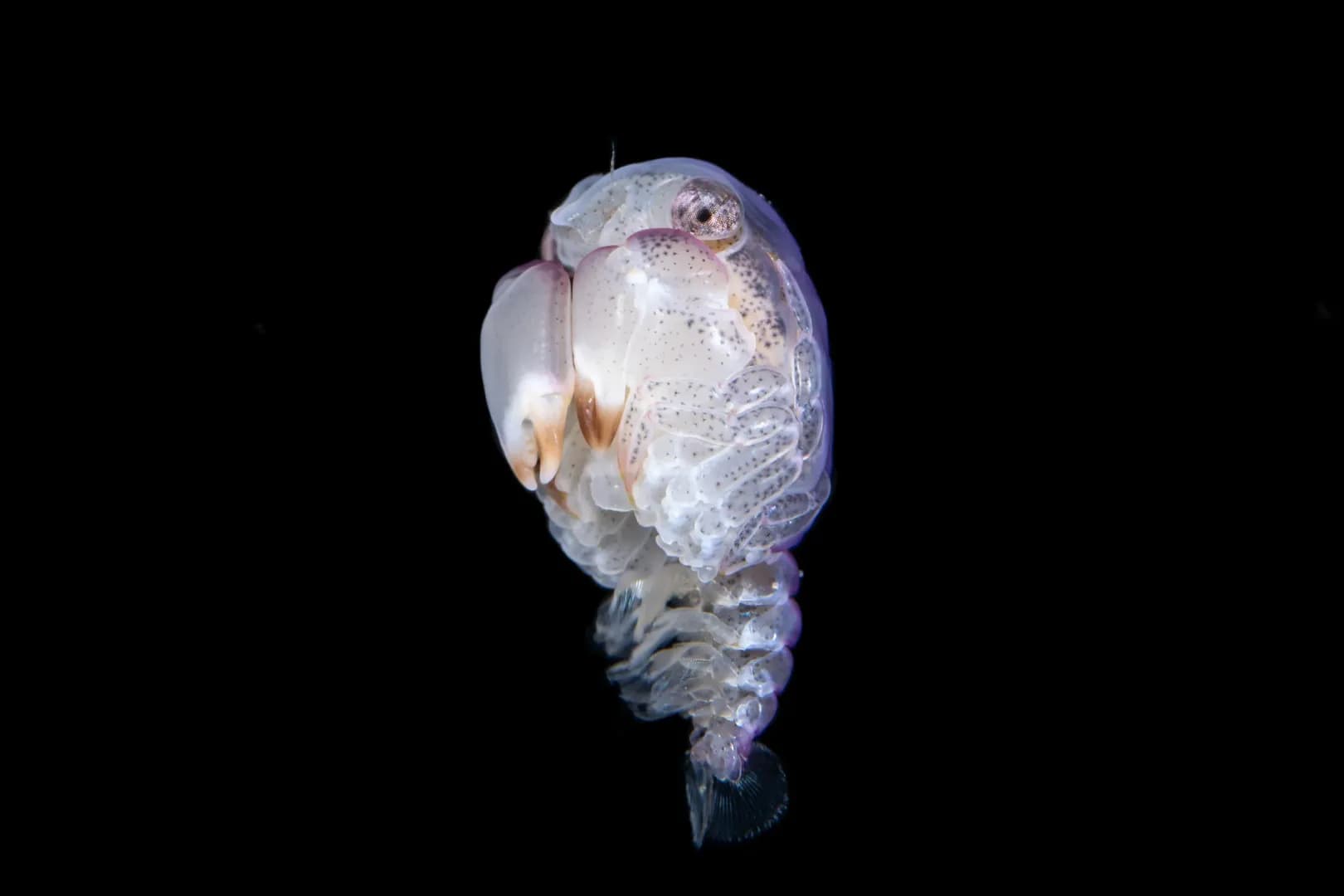
What are Crustaceans?
Crustaceans are arthropods, which belong to the same evolutionary lineage as insects, spiders and centipedes. The group includes crabs, shrimp, lobsters, krill, copepods, amphipods, isopods and barnacles, and ranges from microscopic plankton to giant deep-water crabs.
Most family members have a segmented body, jointed limbs and a hard external skeleton made primarily from chitin, which must be shed as the animal grows.
What really sets crustaceans apart is their extraordinary capacity for specialization. This group has devised many creative solutions to the challenges of life, making the crustaceans an incredibly diverse and fascinating family to study.
Why is Lembeh So Rich in Crustaceans?
The answer lies in habitat diversity. Lembeh's volcanic sand slopes are interspersed with rubble, sponges, hydroids, sea pens, anemones, soft corals and isolated reefs. And this diversity creates countless ecological niches.
With so many habitats to choose from, crustaceans have taken specialization to extraordinary lengths. Rather than simply hiding beneath rocks, some have evolved around particular hosts or microhabitats. Color, body shape, behavior and even surface texture help them disappear into their surroundings.
Once you start looking for these relationships rather than simply looking for ‘shrimp’ or ‘crabs,’ Lembeh begins to reveal a complex, interconnected ecosystem in miniature.
Now, let’s look closer into this network of tiny organisms.
Spiny Tiger Shrimp: Small but Specialized
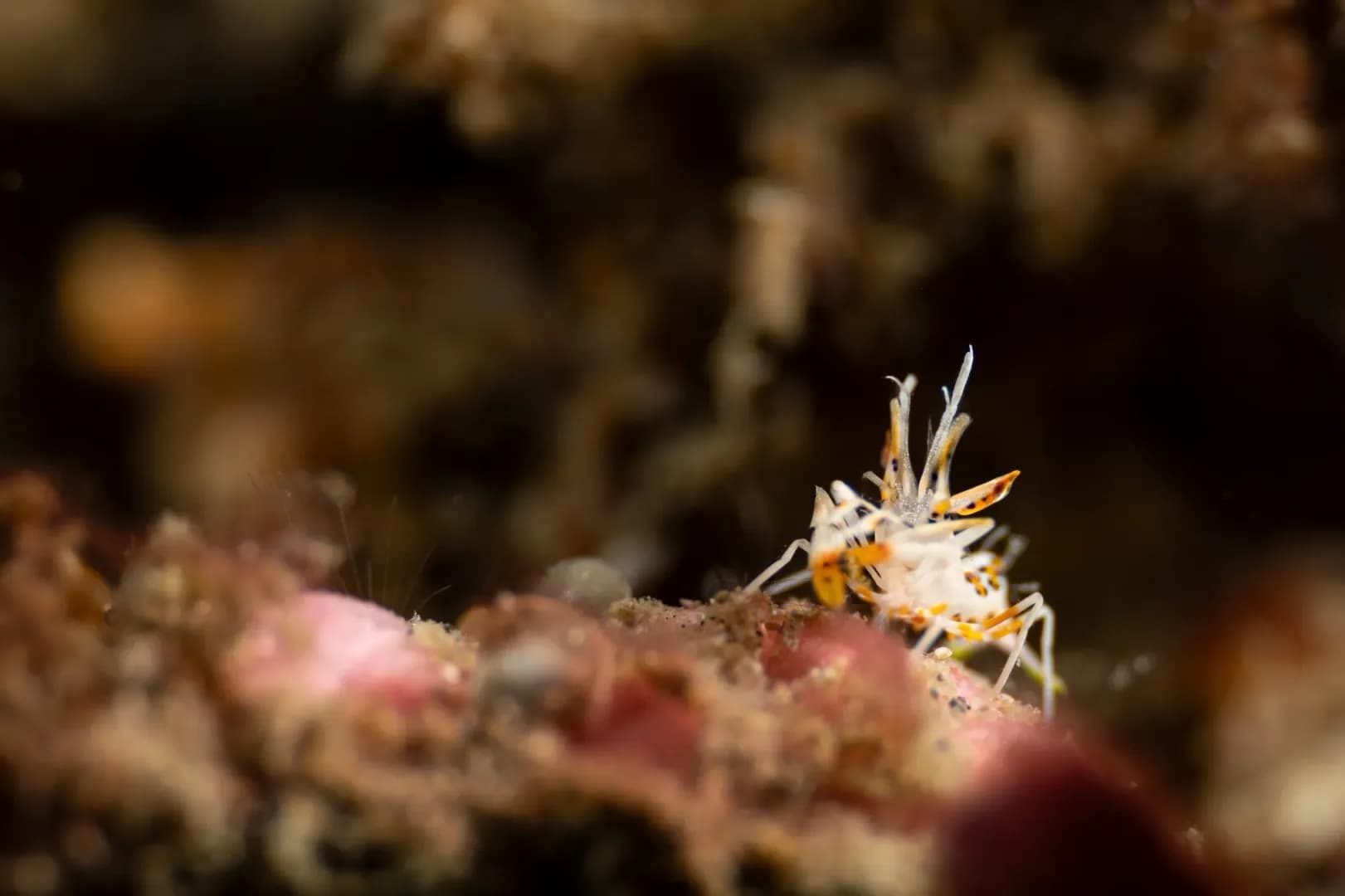
At barely 2 centimeters long, the spiny tiger shrimp (Phyllognathia ceratophthalma) is easy to overlook. Its translucent body has orange markings, blue spots and elaborate projections, while exceptionally long eyestalks add to its unusual look.
This bizarre appearance serves a purpose; its outline helps break up the animal's shape among rubble, algae and sponges, concealing a tiny but specialized predator.
Spiny tiger shrimp feed predominantly on echinoderms, including brittle stars and sea stars. They belong to the family Gnathophyllidae, making them relatives of another specialist echinoderm hunter: the harlequin shrimp.
Harlequin Shrimp: Beauty With a Brutal Side
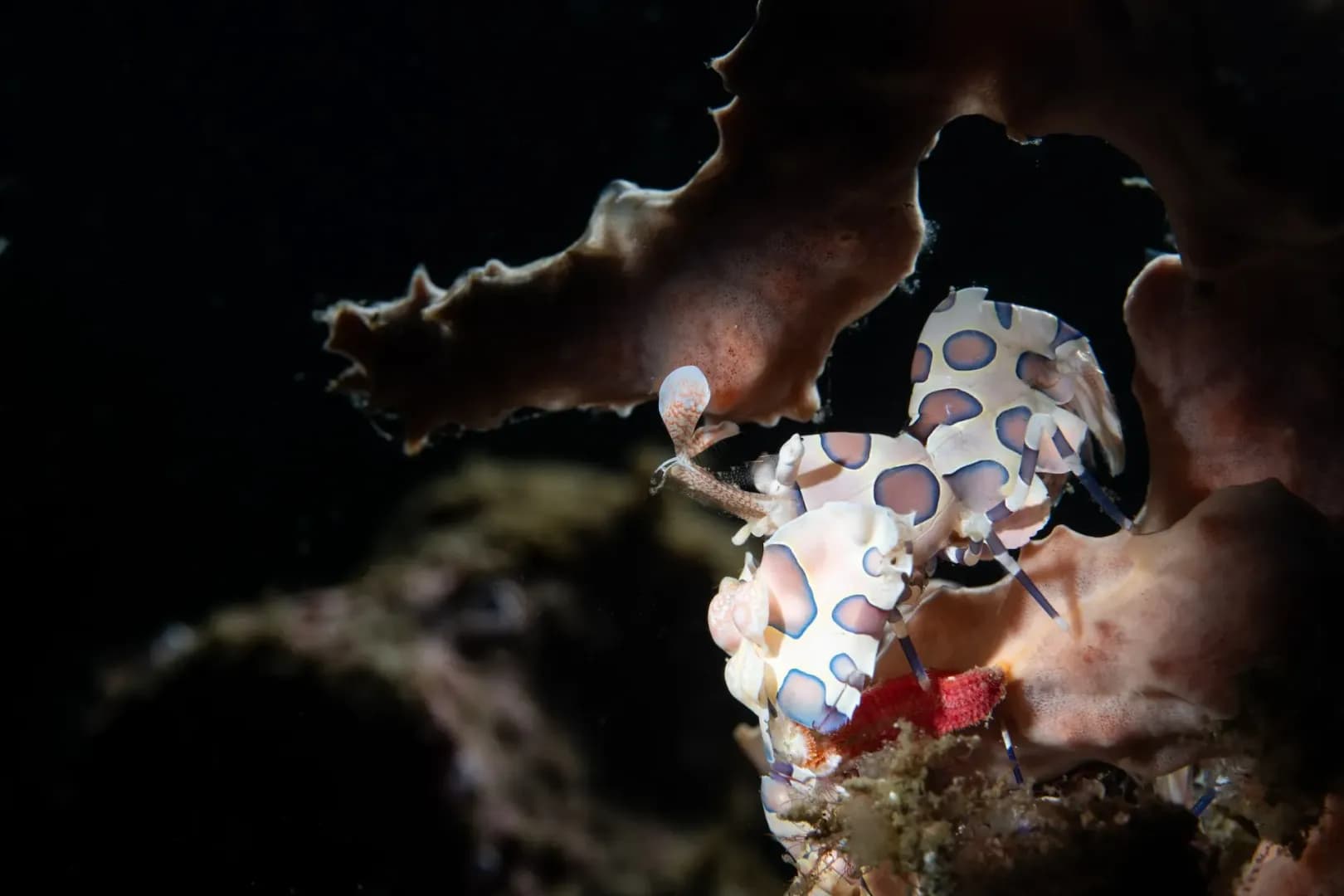
Few crustaceans demonstrate the contrast between appearance and behavior better than harlequin shrimp (Hymenocera spp.). Their flattened bodies and oversized claws carry spectacular cream, blue and reddish-purple markings. But beneath that delicate appearance is a highly specialized predator with an unusual preference: sea stars.
Pairs of harlequin shrimp can cooperate to manipulate prey much larger than themselves, turning a sea star over to expose its vulnerable tube feet before progressively consuming it.
For underwater photographers, feeding behavior like this offers an opportunity to document one of Lembeh's most remarkable predator-prey relationships.
Hairy Shrimp: Camouflage Taken to Extremes
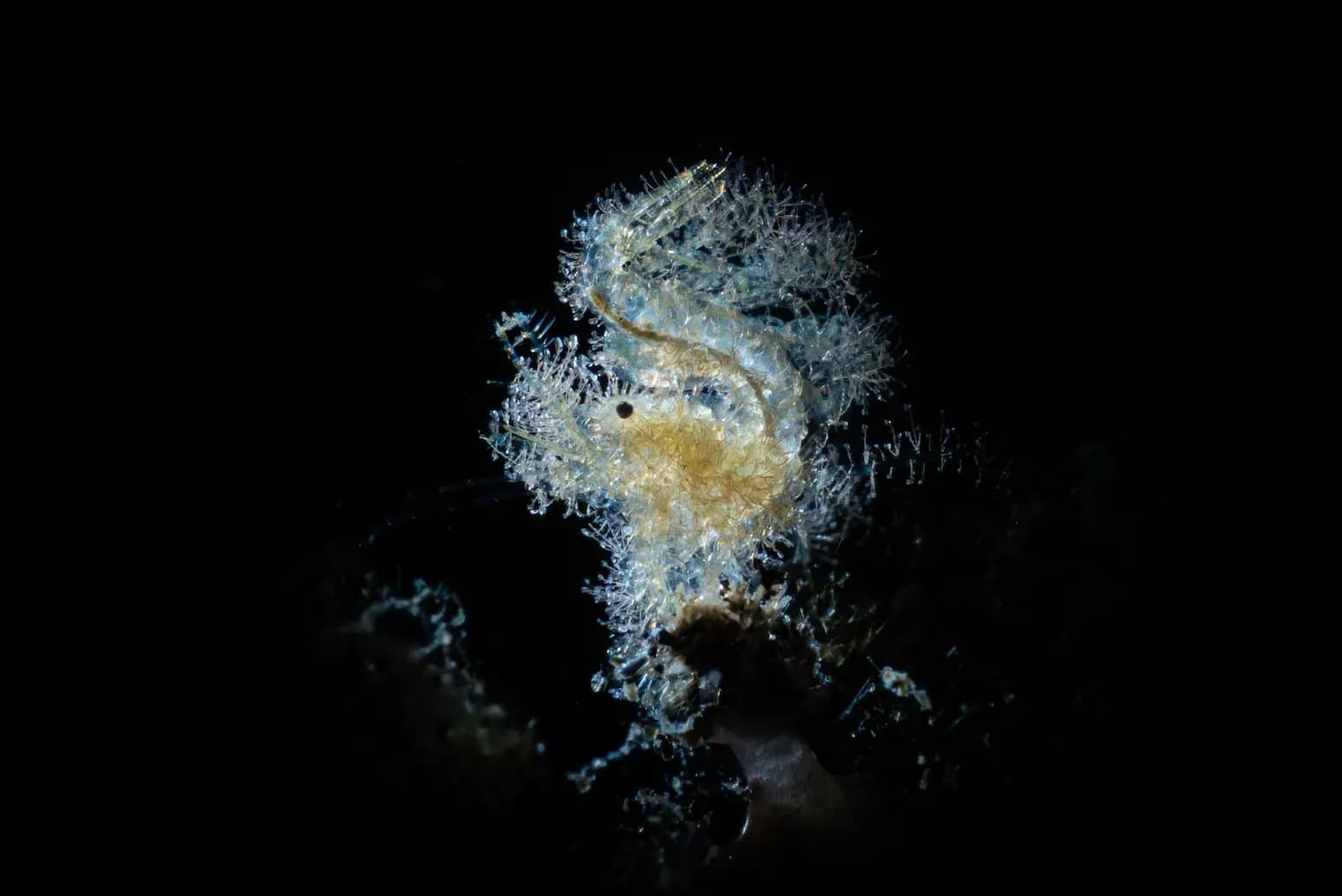
Some of Lembeh's most impressive crustaceans are also among the smallest. Hairy shrimp, generally associated with the genus Phycocaris, measure only a few millimeters and can resemble fragments of algae, hydroids or debris.
Elaborate projections disrupt the familiar shrimp silhouette, while coloration helps individuals disappear against the substrate.
To the naked eye, the animal may register as little more than an irregularity. Under super macro magnification, however, eyes, appendages and the architecture of its exoskeleton suddenly emerge from what appeared to be a piece of detritus.
Few subjects better demonstrate what makes diving in Lembeh so special: tiny treasures, with big stories to tell.
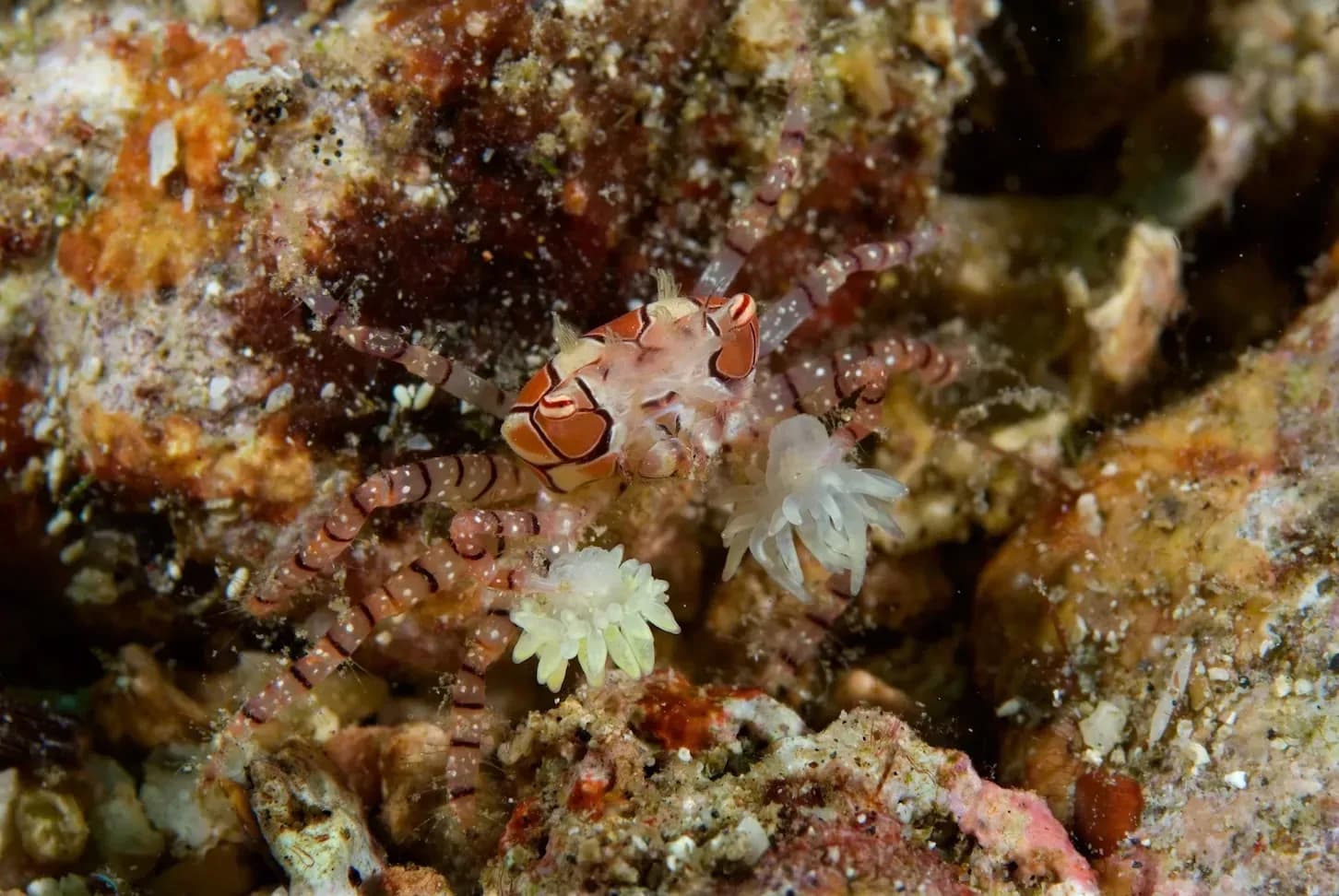
Decorator and Boxer Crabs: Camouflage You Can Wear
Decorator crabs don't just resemble their surroundings; they actively wear them. Hooked setae on their exoskeleton allow them to attach material collected from the environment, including algae, sponges and other living organisms. Some become so comprehensively covered that telling animal from decoration can be difficult.
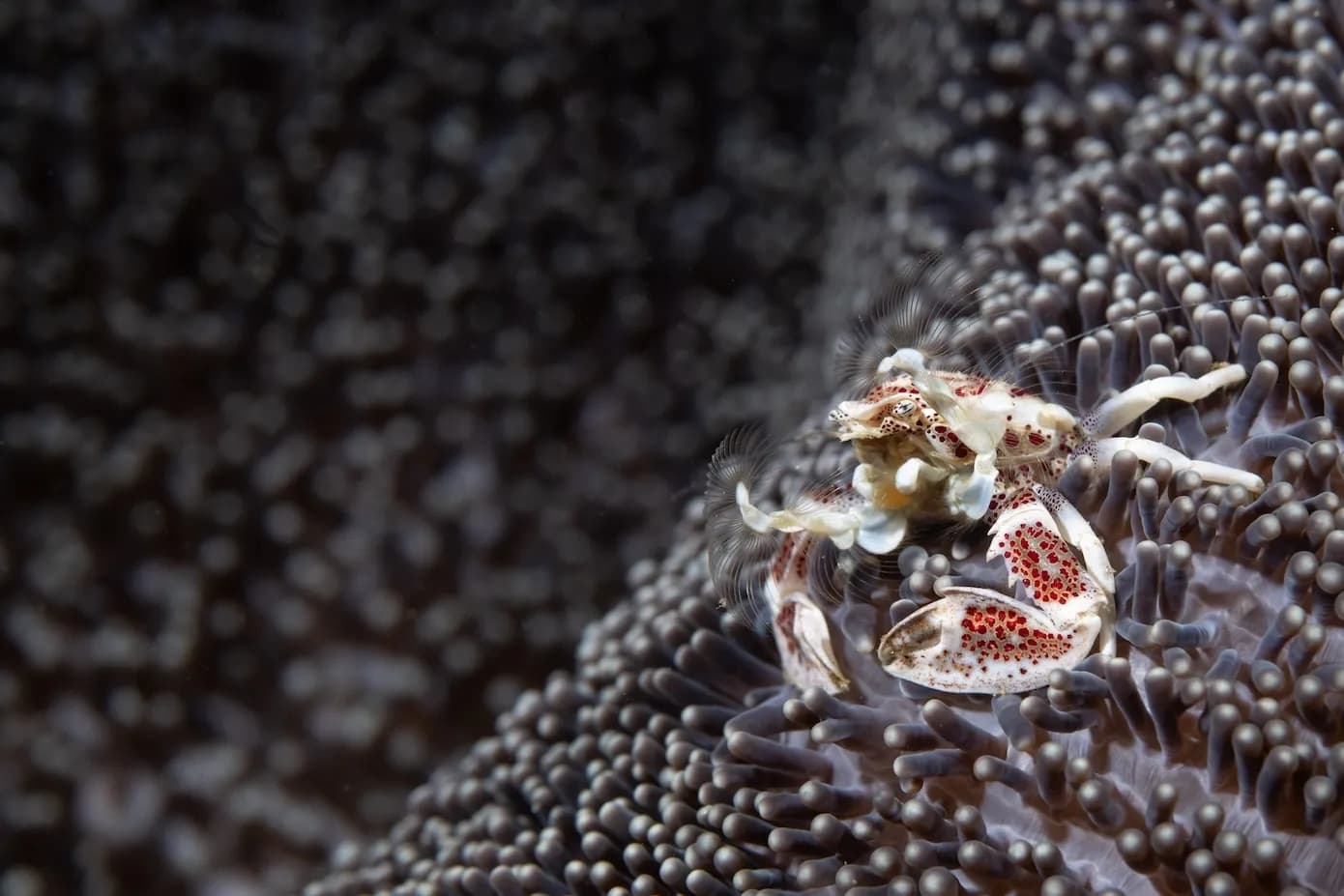
Boxer or pom-pom crabs (Lybia spp.) take camouflage in a very different direction. They carry tiny sea anemones in their claws, which gives them the characteristic ‘boxing gloves’ that give them their common name. When threatened, the crab can raise its anemones defensively.
This is a great example of symbiosis in nature. The crab gets access to the anemones' nematocysts (stinging cells useful for defense and food acquisition); the anemones, meanwhile, gain mobility and greater access to food. It’s a partnership that has taken millions of years to form, but plays out every day in the Lembeh Strait.
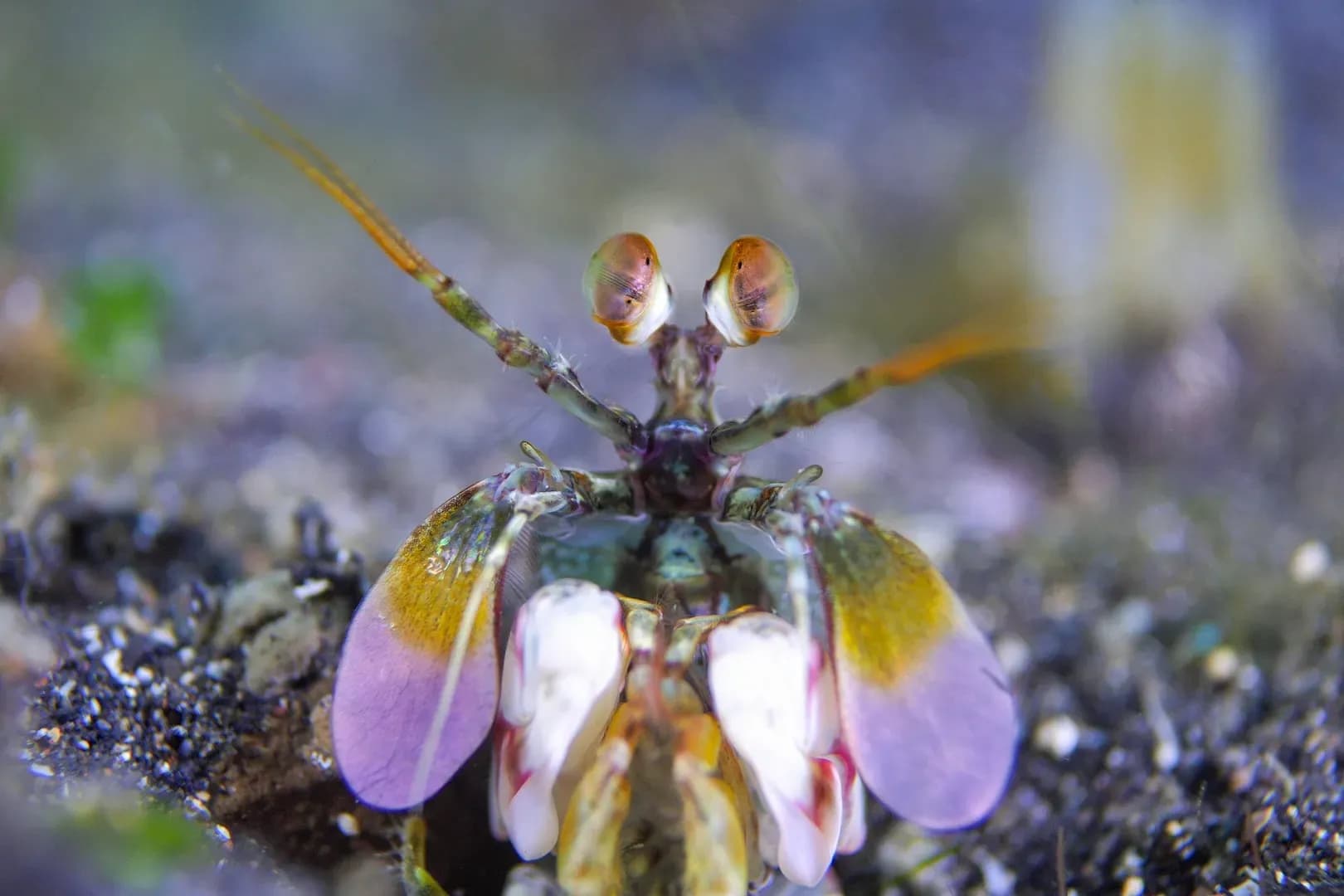
Mantis Shrimp: Built for Combat
Not every crustacean survives by hiding or defending itself. Others are voracious predators. Stomatopods, better known as mantis shrimp, possess some of the most sophisticated weapons among all marine invertebrates.
Their modified raptorial appendages broadly divide them into ‘spearers,’ which impale softer prey, and ‘smashers,’ which strike hard-bodied prey with reinforced clubs.
Lembeh's pink-eared mantis shrimp (Odontodactylus latirostris) is a smasher. Its highly accelerated strike allows it to tackle armored prey such as mollusks. Its sensory equipment is equally remarkable. Mantis shrimp possess highly complex compound eyes that move independently and process visual information in ways dramatically different from our own.
The Closer You Look
This incredible diversity, adaptability, and tendency towards specialization is what makes searching for crustaceans in the Lembeh Strait so endlessly fascinating. Here, every dive reveals something different.
A piece of algae begins walking. A sponge suddenly grows legs. What looked like debris reveals a pair of eyes. Look more closely at an anemone, whip coral or patch of rubble and another miniature relationship comes closer into focus.
Crustaceans are predators, scavengers, cleaners, hitchhikers, architects and masters of disguise. Some carry other animals. Others hunt prey many times their own size or disappear almost completely into their hosts.
More than 500 million years after their evolutionary story began, crustaceans continue to demonstrate the extraordinary versatility of one remarkably successful body plan.
And in Lembeh, the smaller you look, the more there is to see.
Related reading: