Miniature Marvels: Discover Five Rare & Charismatic Critters in the Lembeh Strait
Few places on Earth can rival the biodiversity of the Lembeh Strait. Famous in the global diving community as the ‘Critter Capital of the World’, this narrow stretch of water off the coast of North Sulawesi is home to an astonishing variety of rare, bizarre, and beautifully camouflaged marine animals; from mesmerizing octopus and ghostly scorpionfish to tiny shrimp, nudibranchs, and other macro treasures, Lembeh’s blend of volcanic black sand, nutrient-rich waters, and diverse underwater habitats creates the perfect environment for some of the ocean’s most unusual species to thrive.
For underwater photographers, divers, and critter hunters, Lembeh Resort provides unrivaled access to this extraordinary ecosystem. Our experienced dive guides are renowned for their ability to spot even the most elusive animals, helping guests encounter species that many divers spend years searching for elsewhere. Combined with dedicated facilities, expert local knowledge, and convenient access to the Strait’s best dive sites, Lembeh Resort is your basecamp for adventures into the hidden wonders of Indonesia’s macro diving capital.
In this article, we feature five of the rarest and most captivating critters you can find here in Lembeh. Let’s dive in.
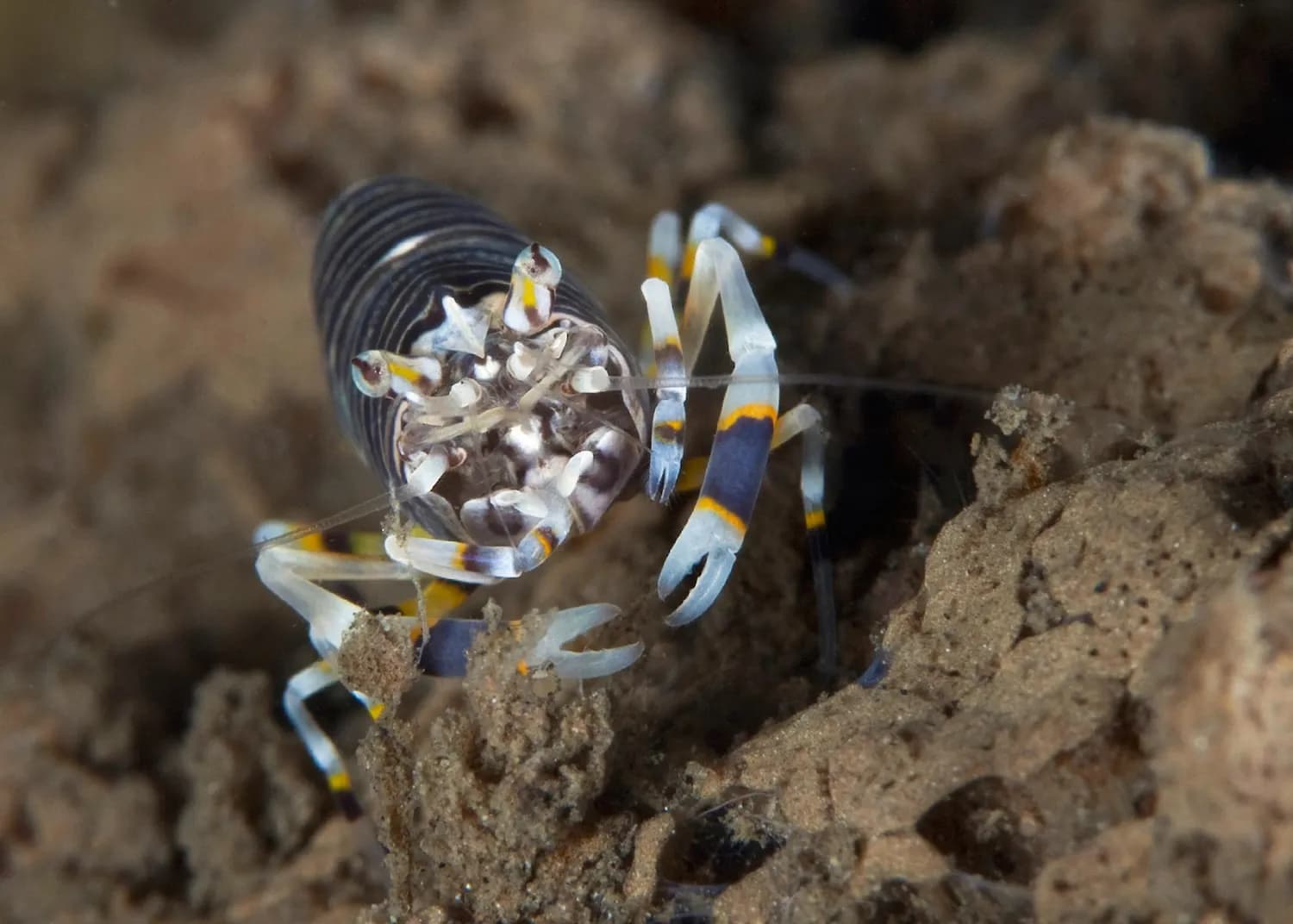
Bumblebee Shrimp
Tiny but unmistakable, the bumblebee shrimp (Gnathophyllum americanum) grows to around 1–2 centimetres in length and is named for its bold black-and-yellow bands, which resemble the striped patterns on the flanks of a bumblebee. Its striking coloration may help deter predators, while also providing camouflage among the spines and textures of its hosts—the bumblebee shrimp is usually found hiding among sea urchins, sea stars, and coral rubble. Here in the Lembeh Strait, divers will sometimes spot them carefully picking across reef surfaces in search of tiny food particles and organic debris.
Despite their delicate appearance, bumblebee shrimps are active scavengers and opportunistic feeders. They are most commonly seen in pairs or small groups and tend to remain close to protective shelter during daylight hours. Their diminutive size and cryptic habits make them a favorite subject for macro photographers, especially in Lembeh’s calm, silty environments where patient divers can observe their intricate movements up close.
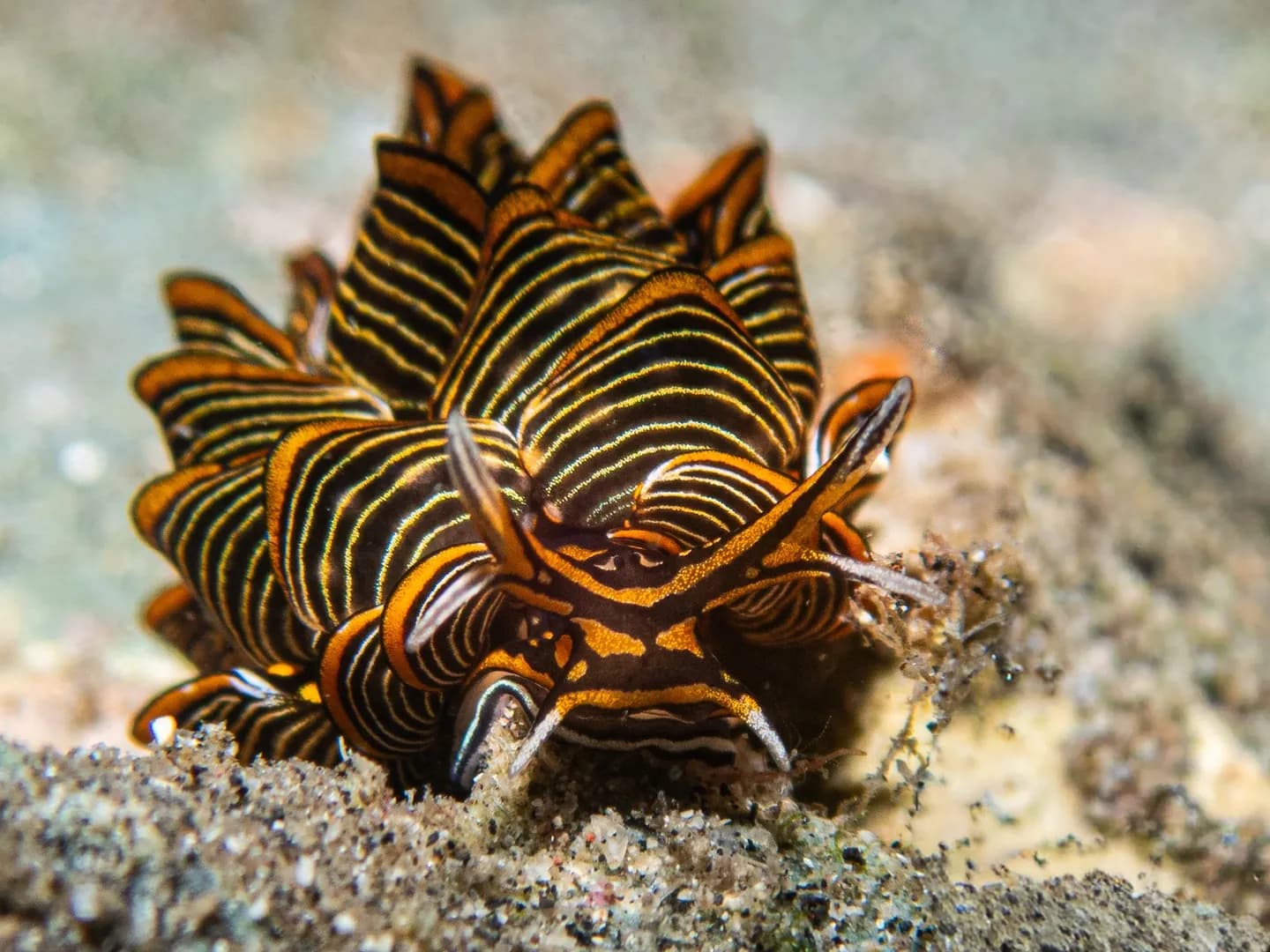
Cyerce nigra
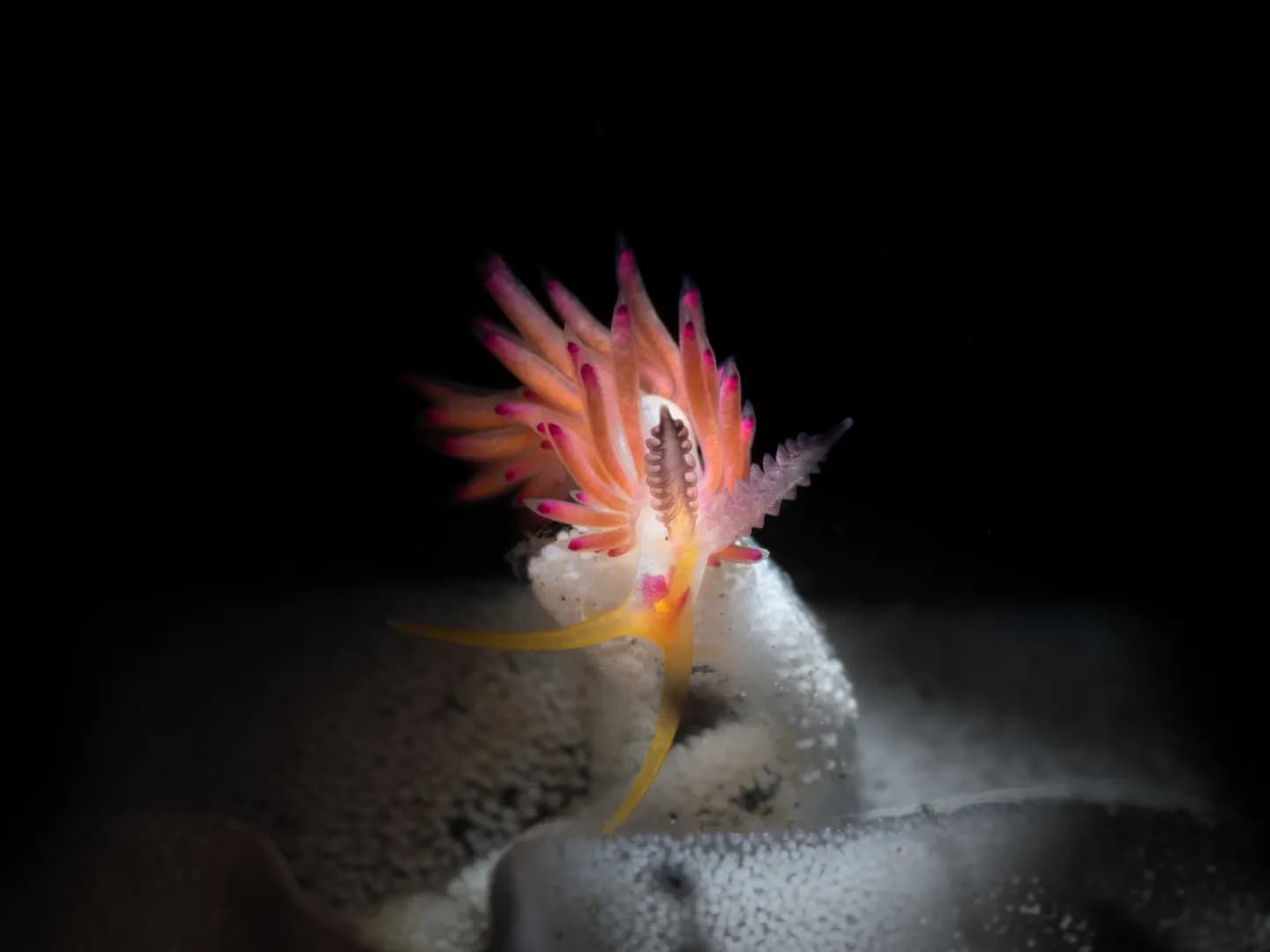
Also known as the butterfly sea slug, Cyerce nigra is one of Lembeh Strait’s most unusual and photogenic critters. Measuring just 2-4 cm and covered in dark branching appendages tipped with electric blue, orange, or white highlights, it resembles a drifting piece of algae or soft coral. These appendages, known as cerata, can detach when the slug is threatened—distracting predators while it makes its escape. The species is rarely encountered outside select Indo-Pacific muck diving hotspots, making Lembeh one of the best places in the world to photograph it.
Unlike many nudibranchs, sacoglossans such as Cyerce nigra feed primarily on algae, using specialized mouthparts to pierce plant cells and extract their contents. Their slow, deliberate movements and extraordinary coloration make them a dream subject for underwater photographers; because they are so small and easily overlooked, spotting one often depends on the sharp eyes of our experienced local dive guides.
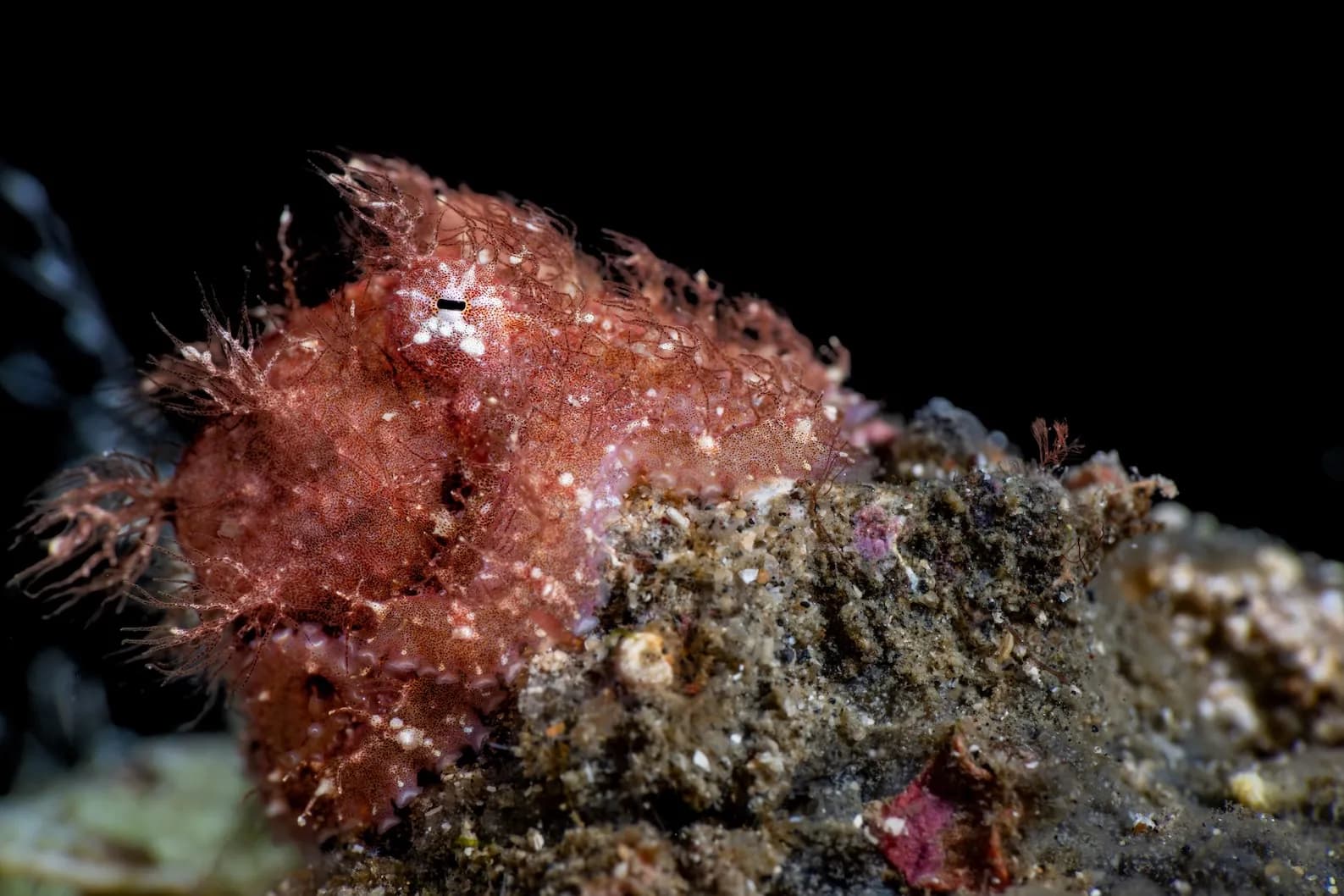
Hairy Octopus
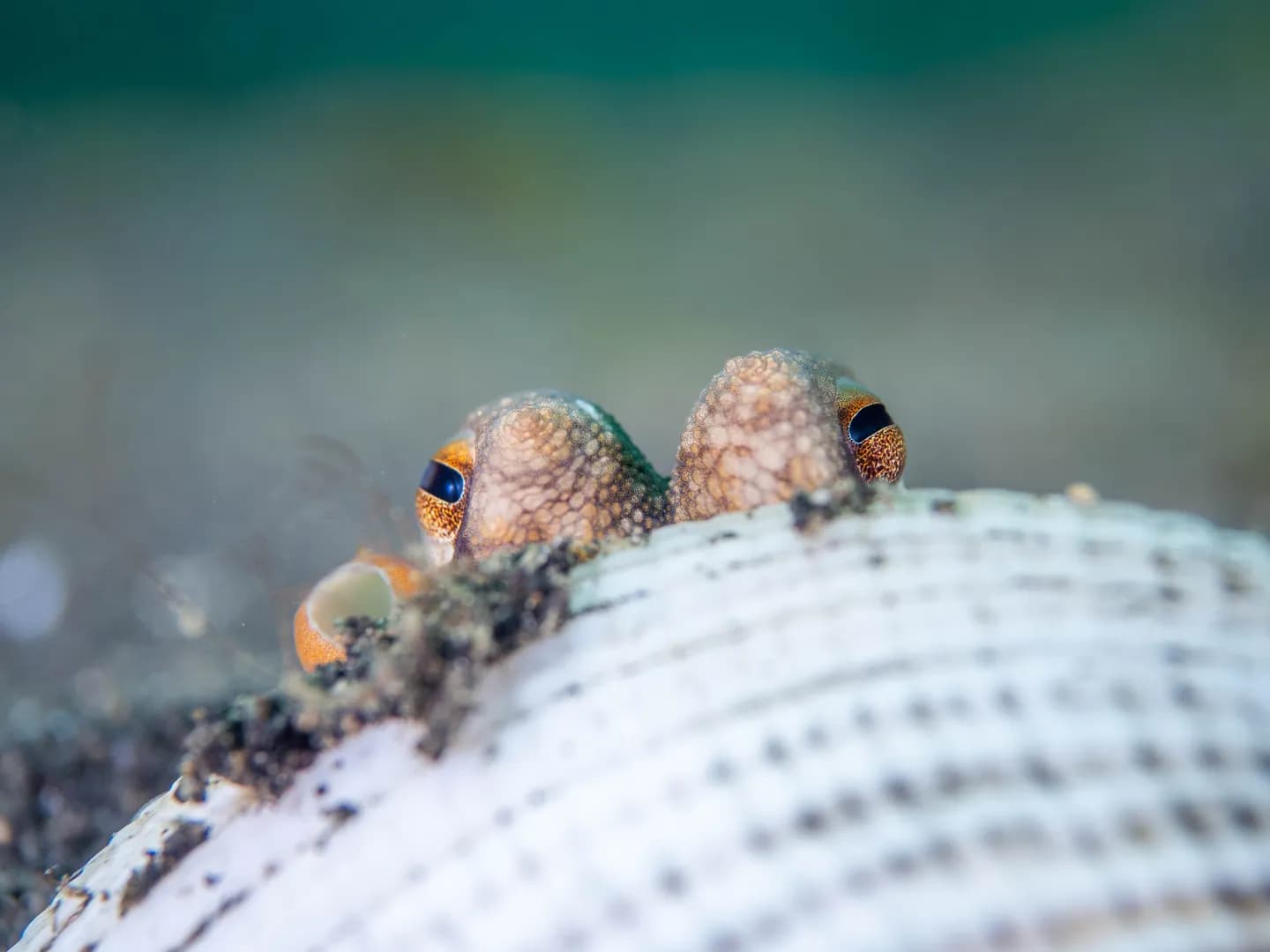
The hairy octopus (Octopus sp.) is one of the Lembeh Strait’s most iconic and mysterious residents. Famous for the delicate branching filaments covering its body, this small cephalopod (measuring just 5-10 cm) can dramatically change both its coloration and texture in seconds, blending seamlessly into algae, rubble, or soft corals. Individuals may appear bright orange, cream, brown or deep red depending on their surroundings (and their mood). Although technically not ‘hair’, the skin filaments help break up the animal’s outline and improve camouflage against predators.
Hairy octopuses are highly intelligent ambush predators that feed on small crustaceans and fish. They are often seen slowly ‘walking’ across the seabed using their arms, or carefully stalking their prey before striking with remarkable speed. Because they are relatively rare and unpredictable, encounters are highly prized among divers and underwater photographers visiting Lembeh.
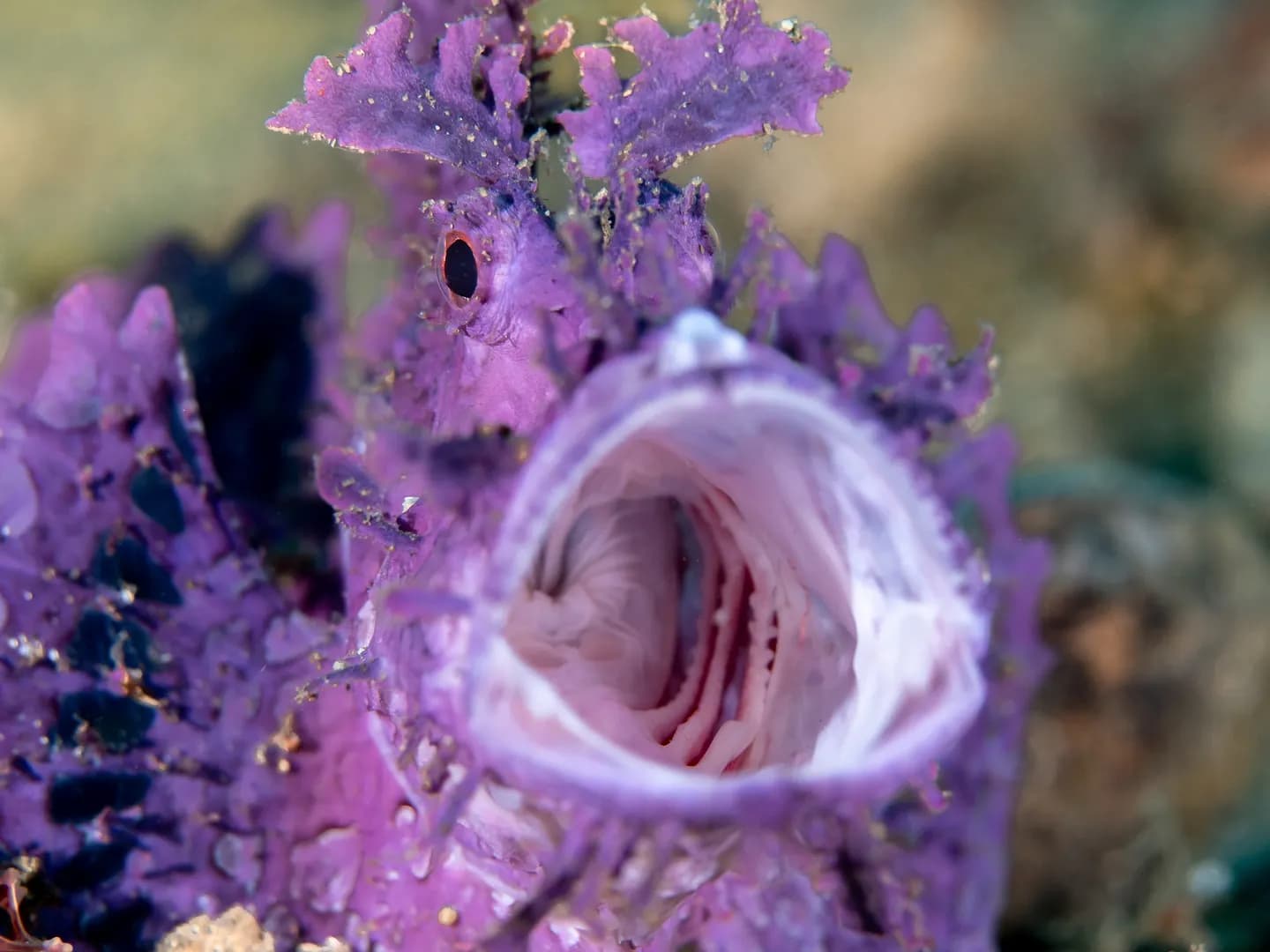
Lacy Rhinopias
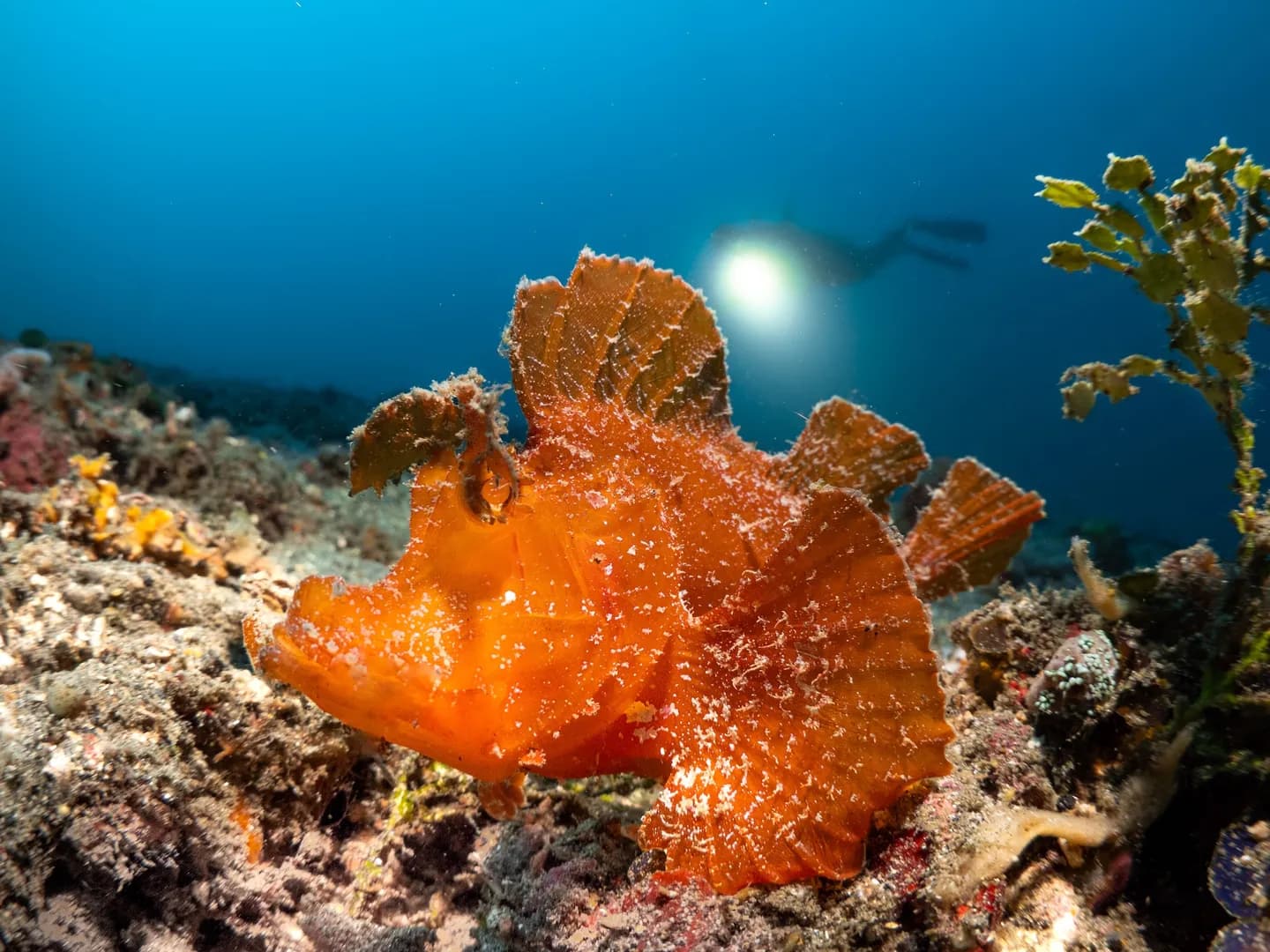
The lacy rhinopias (Rhinopias aphanes) is among the rarest and most sought-after scorpionfish in the world. Measuring around 15-18 cm in length, with prominent eyebrows and moustache, elaborate frilly appendages, ornate fins, and extraordinary camouflage, it looks more like a drifting piece of sponge or algae than a fish. Color variations range from pink and yellow to deep red or purple, allowing individuals to blend into their surroundings with astonishing effectiveness. The Lembeh Strait is one of the few locations in the world where divers have a realistic chance of encountering this mysterious species.
Like other scorpionfish, the lacy rhinopias is an ambush predator equipped with venomous dorsal spines. Rather than actively chasing prey, it relies on patience and camouflage, remaining motionless until an unsuspecting fish or shrimp comes within range. Despite their exotic appearance, rhinopias are surprisingly delicate and slow-moving, often using their modified fins to ‘walk’ across the seabed instead of swimming.
Leopard Shrimp
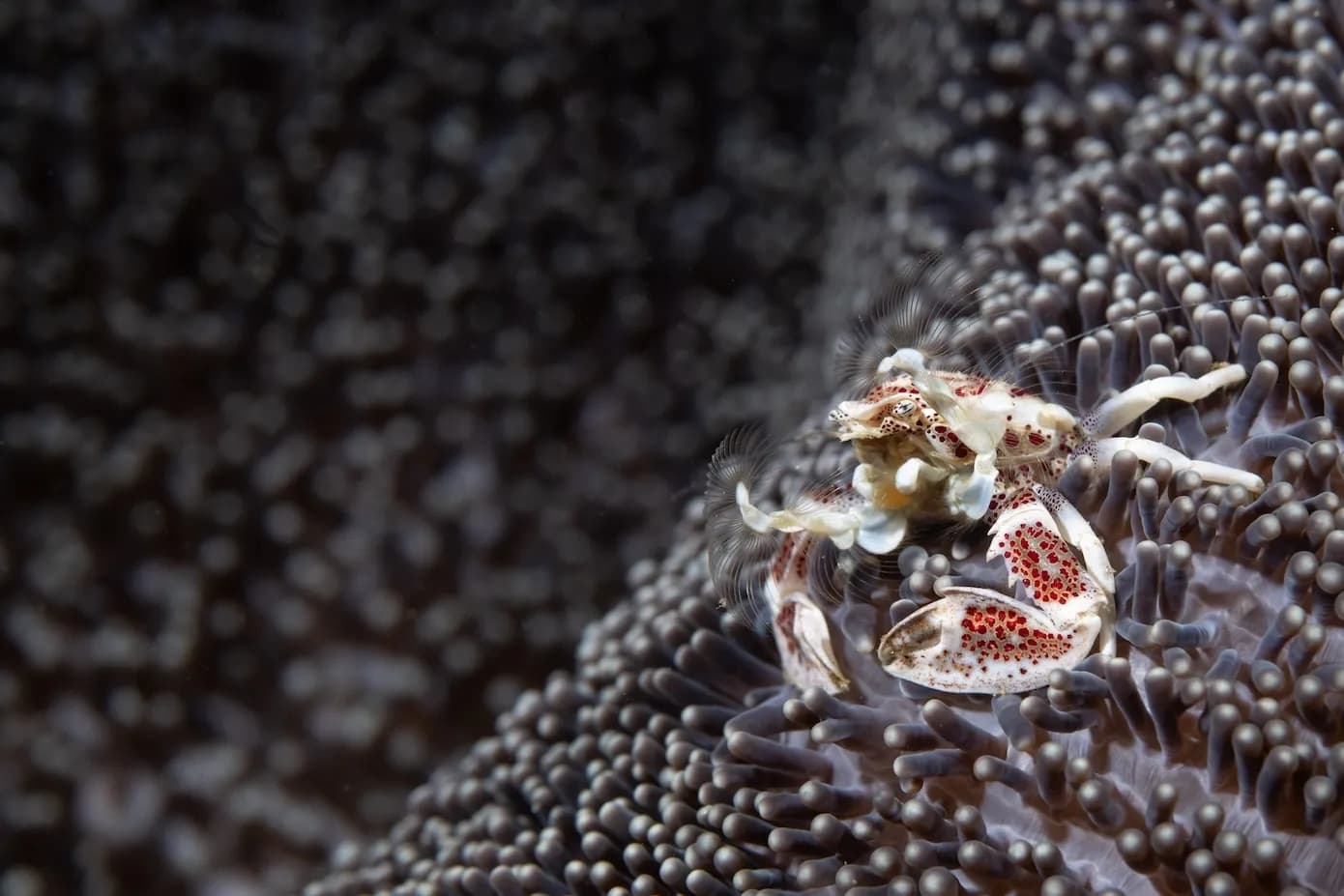
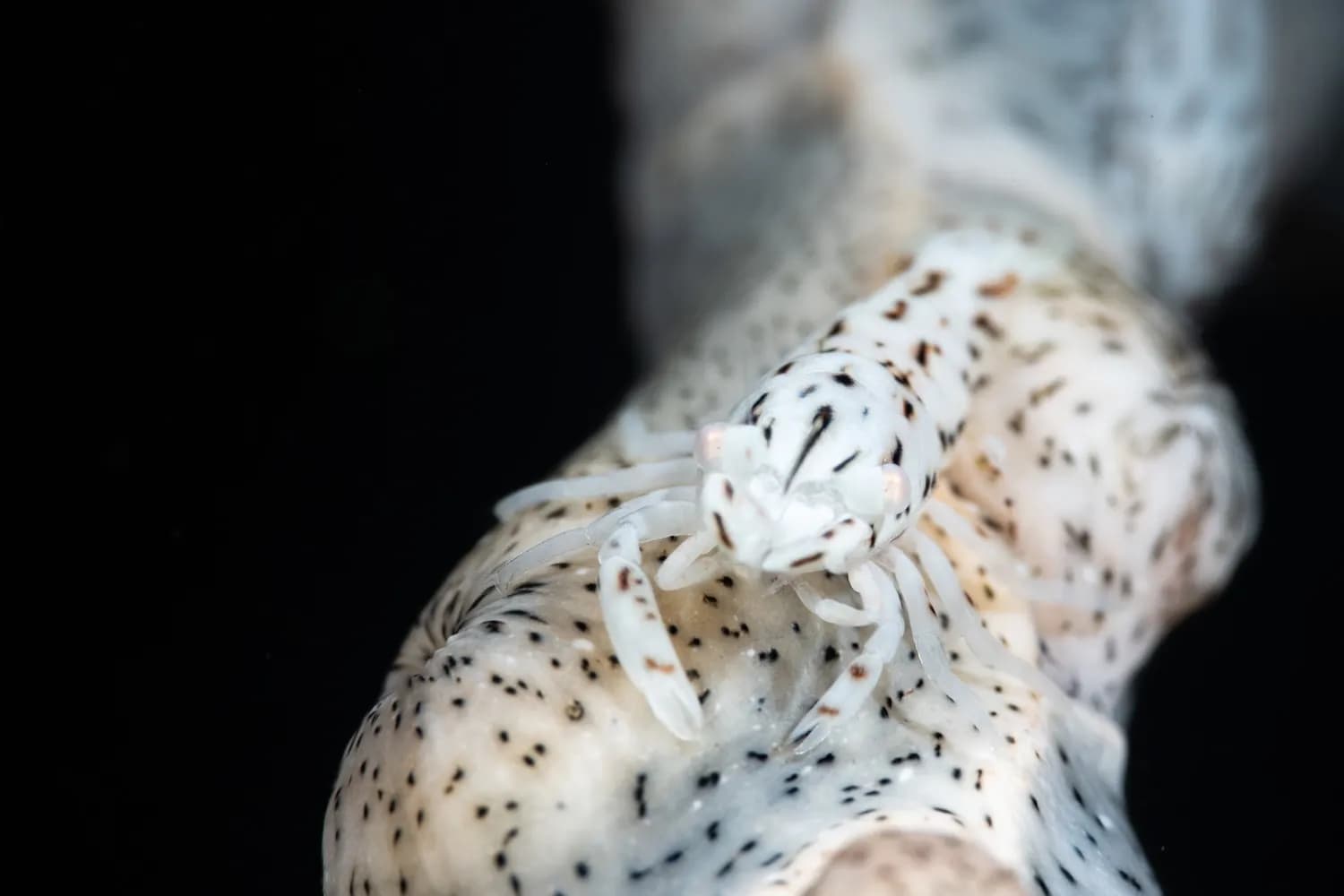
Often referred to locally as the Leopard shrimp, this species in the Saron genus is recognized by its intricate spotted patterns, elongated pincers, and feathery body hairs. These crustaceans typically emerge at night to forage across reefs and rubble slopes, feeding on algae, detritus, and tiny invertebrates. Their highly detailed markings provide excellent camouflage among broken coral and rocky substrates, helping them avoid predators during daylight hours.
Measuring 5-7cm (about the size of a matchbox or a human thumb), leopard shrimps are especially popular with macro photographers in Lembeh, because of their vivid patterns and reflective eyes, which can create dramatic portraits under the right lighting. In Lembeh Strait, they are most commonly encountered on night dives, when the seafloor comes alive with unusual crustaceans and other nocturnal hunters.
Each of these six remarkable creatures embody the beauty, magic, and mystery of the Lembeh Strait; a place where tiny treasures and shapeshifting oddities proliferate in spectacular abundance and diversity. But they are also just a handful of the extraordinary species that call the Strait home—many more are waiting to be discovered.
If you are ready to experience Lembeh’s hidden magic for yourself, our team will be happy to answer any questions and tailor your trip to ensure it is the experience of a lifetime. For more information and to get started on your adventure into the world’s Critter Capital, please visit our website or get in touch. Incredible encounters, a touch of luxury, and a warm welcome are all waiting for you at Lembeh Resort!
Read More: