Lembeh After Dark: A Guide to Blackwater and Bonfire Diving

The Lembeh Strait attracts divers from all over the world in search of the weird and wonderful, the rare and bizarre. Diving days here are filled with incredible encounters, justifying the Strait’s reputation as the Critter Capital of the World. But when the sun sinks below the horizon, things get really wild.
Blackwater and bonfire dives reveal a different side to the Lembeh Strait, and a whole new level of otherworldly beauty. For underwater photographers, marine-life enthusiasts or simply divers searching for something different, these are among the most unusual experiences Lembeh has to offer. In this article, we take a closer look at blackwater and bonfire diving, and spotlight some of the mysteries waiting to be discovered in the depths of the Lembeh Strait.
What is blackwater diving?
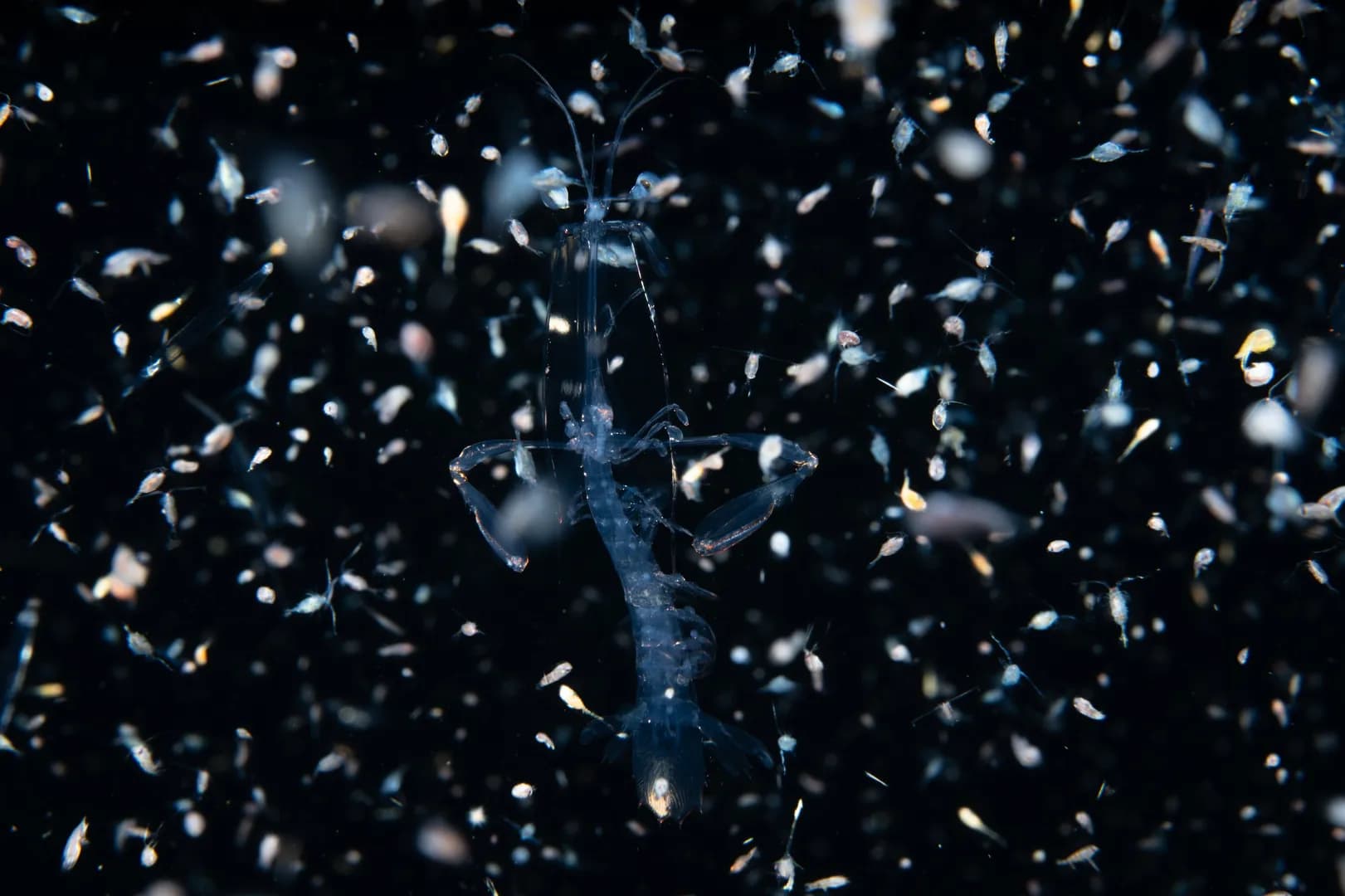
Blackwater diving takes place at night over deep, open water, away from the reef and substrate. In the Lembeh Strait, bright lights are suspended in the water column, attracting plankton and other tiny marine animals moving through the darkness.
It is a very different environment from a conventional dive. Look down and there may be no bottom in sight. Look sideways and the familiar landmarks of a reef are gone. Instead, you are suspended in darkness, relying on the illuminated downline, your dive instruments and your guide for orientation.
Then the creatures begin to appear.
Much of what blackwater divers encounter is connected to diel vertical migration (DVM), the daily, synchronized movement of marine organisms—such as zooplankton, small fish, and squid—between the deep ocean and the surface waters over a 24-hour cycle. This natural phenomenon is considered the largest animal migration on Earth, and it happens every night, right here in Lembeh.
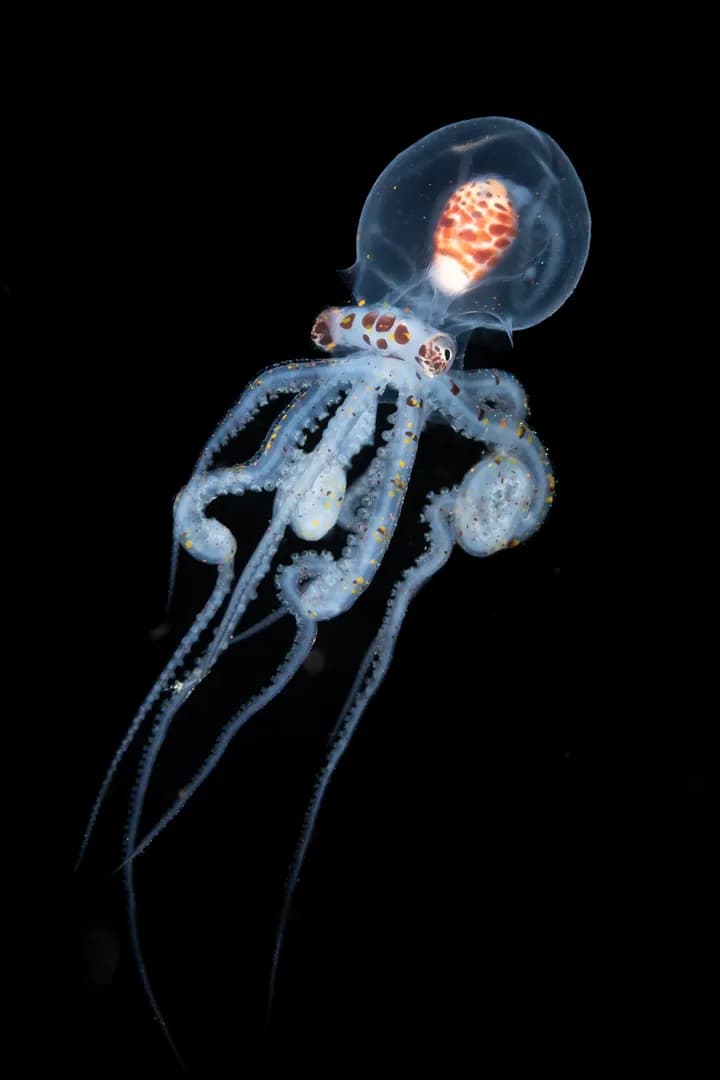
Blackwater diving creates an opportunity to encounter animals that ordinarily remain hidden far below, or spend only the early, larval stages of their lives drifting through the open ocean. It is a unique glimpse into a secretive world.
What is bonfire diving?
Bonfire diving works on a similar principle to blackwater dives, but there is one crucial difference: there is a bottom. Rather than being suspended over deep water, powerful lights are positioned on or close to a shallow sandy slope. Like a campfire attracting visitors after dark, the lights draw concentrations of plankton and other tiny organisms. These, in turn, can attract larval animals and predators.
Because divers remain close to the seabed, bonfire diving provides familiar visual and depth references. This can make it an excellent introduction for divers intrigued by blackwater diving but unsure about floating over deep water in near complete darkness.
Both experiences reveal animals seldom seen by divers. However, they offer distinctly different ways to explore Lembeh after dark.
Into the darkness: What does a blackwater dive feel like?
Your first blackwater dive can feel slightly surreal. Without a reef or seabed beneath you, the sense of space changes completely. The surrounding darkness initially seems enormous. Your attention gradually narrows towards the lights and the small patch of water immediately around you.
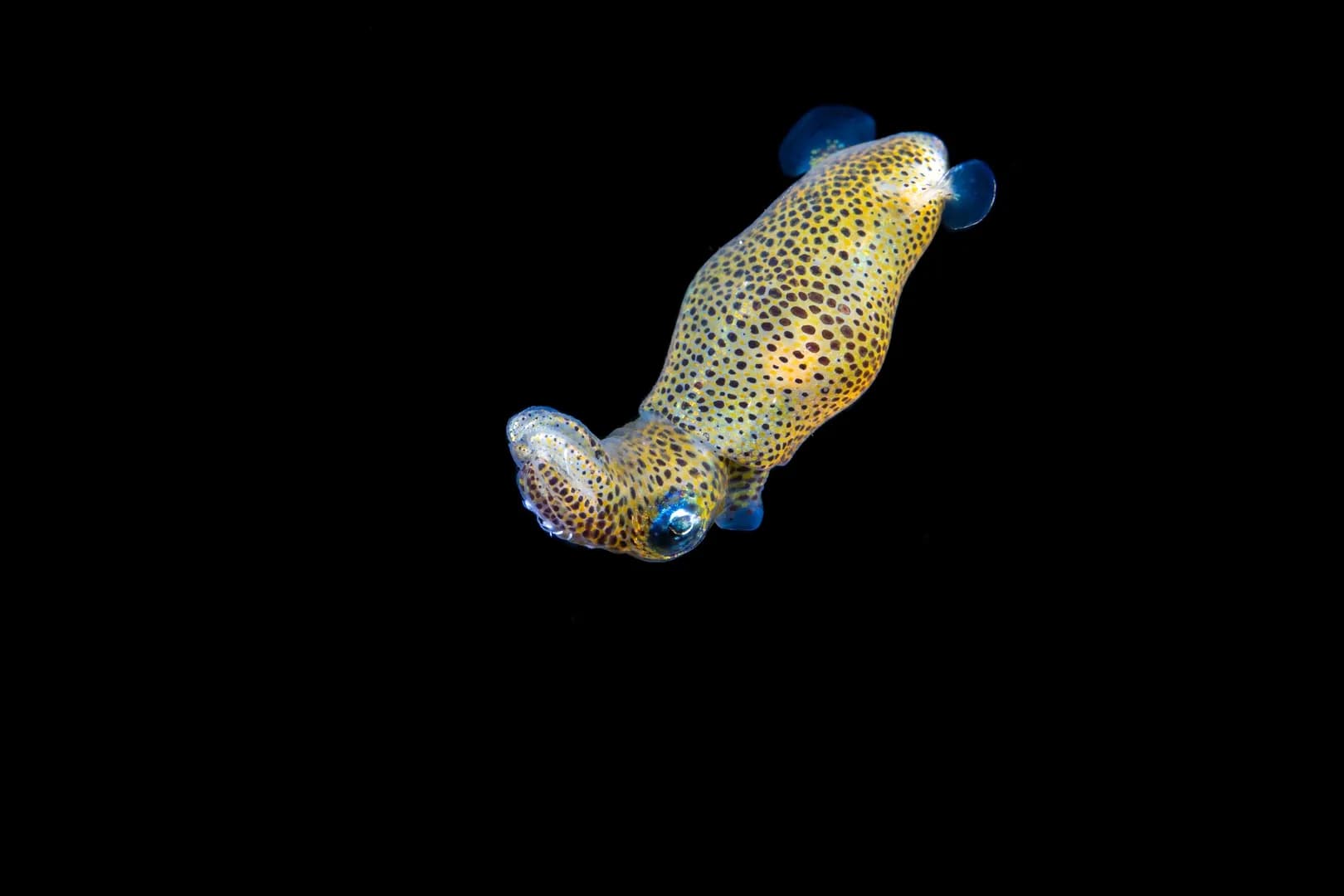
Then you notice something moving. Perhaps it is a transparent larval fish measuring only a few centimeters. A tiny squid might dart into view. A jellyfish pulses through the light. This unpredictability is one of blackwater diving’s greatest attractions; there is no coral head to revisit and no guarantee that yesterday’s star attraction will return tonight—you are effectively waiting to see what the ocean delivers.
Bonfire diving feels a little different. With the seabed visible, you get a clearer sense of where you are. The illuminated area becomes a miniature stage, with plankton and other creatures appearing from the surrounding darkness. In both cases, patience and observation are rewarded with incredible encounters.
What can you see on blackwater and bonfire dives?
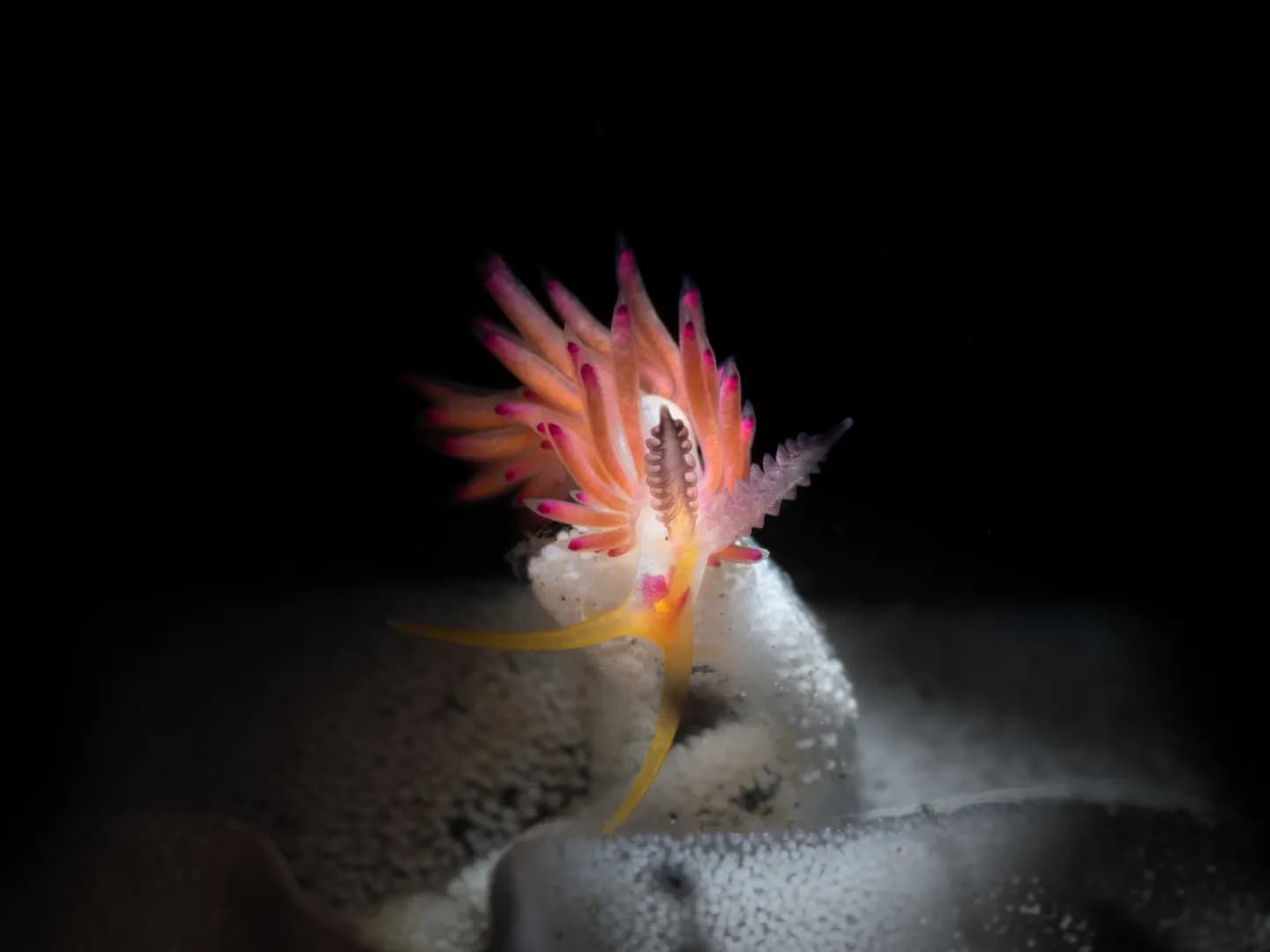
Expect the unexpected. Many blackwater subjects are animals in their larval or juvenile stages. Some look dramatically different from the adults they will eventually become. Others are transparent, elaborately ornamented, or so small that their extraordinary details only become apparent through a macro lens.
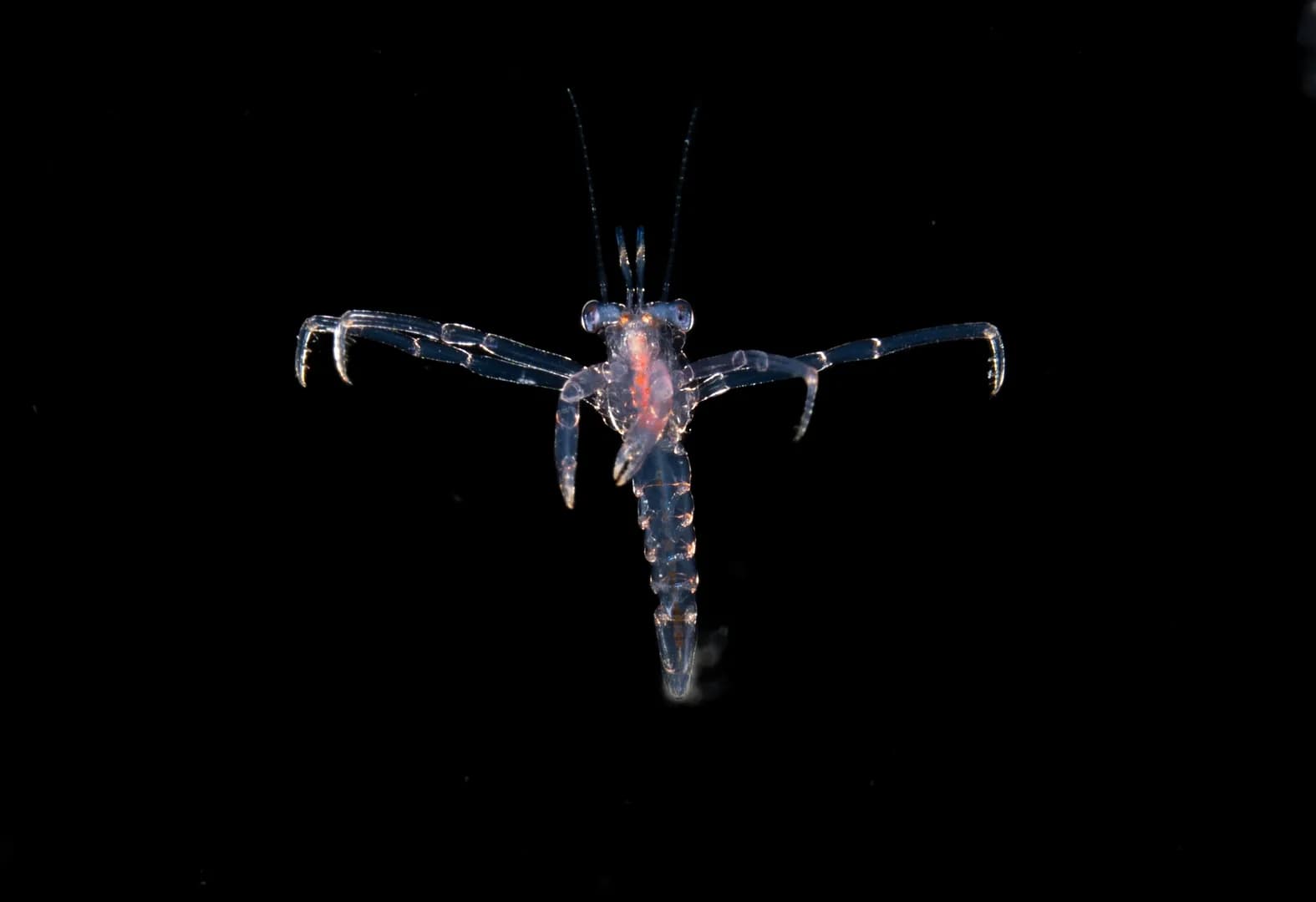
Crustacean and cephalopod larvae are among the classic blackwater subjects in Lembeh. Divers may also encounter juvenile fish, jellyfish, tiny shrimp and crabs, squid, octopuses and other drifting organisms.
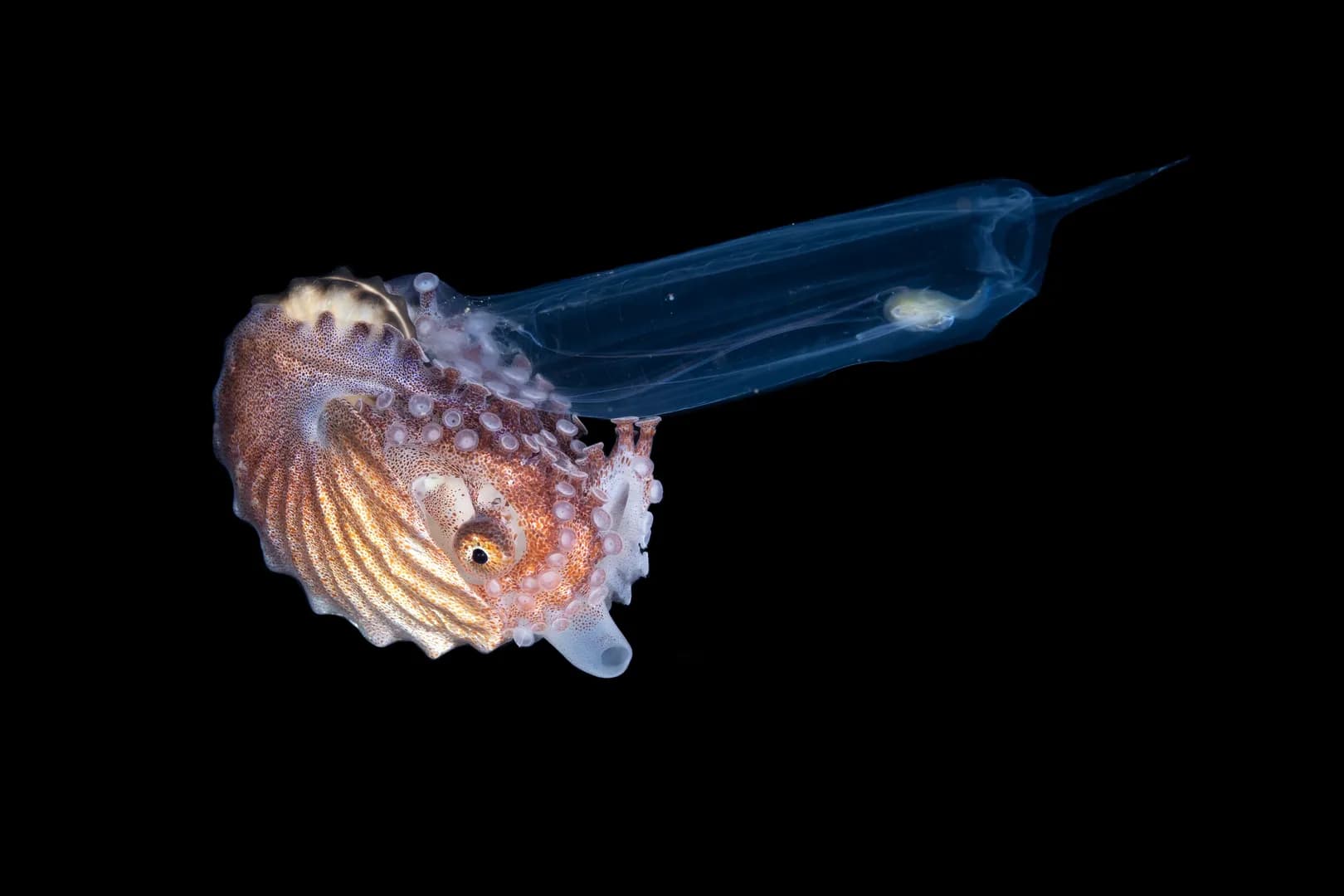
Some encounters can be particularly special. Divers at Lembeh Resort are occasionally treated to sightings of paper nautilus and blanket octopus during these dives, alongside numerous larval-stage species rarely encountered during conventional diving.
But creating a checklist rather misses the point. Part of the magic is not knowing what the next few minutes will bring; every dive samples a constantly shifting community of animals moving through the Strait—a snapshot of the incredible biodiversity this region supports.
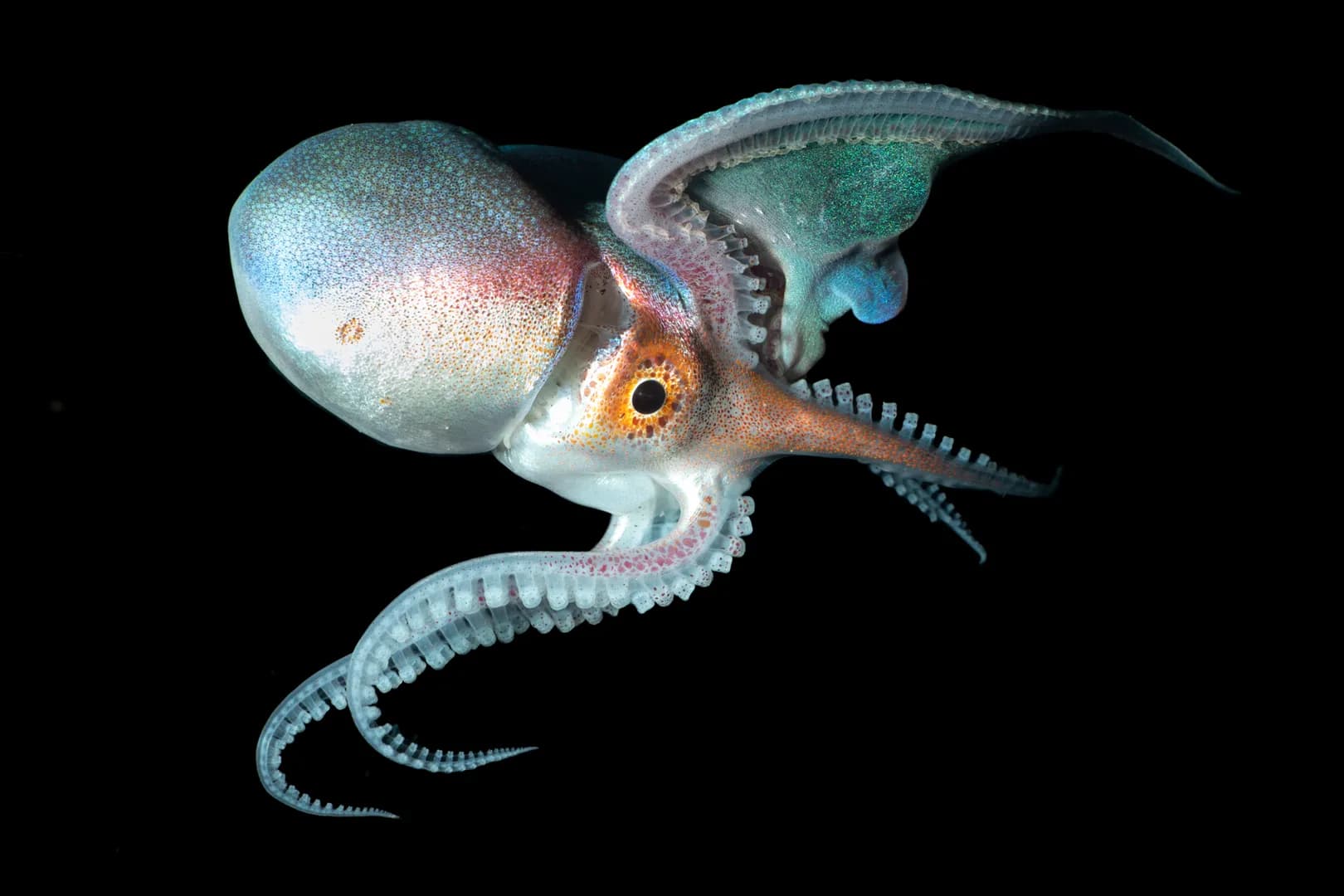
Blackwater diving has become particularly popular with underwater photographers—and it is easy to understand why. Rare and captivating critters, illuminated against dramatic black backgrounds, make for some incredible images.
Getting the shot, however, presents some unusual challenges. Subjects are generally small and often move unpredictably. There is no seabed to brace against, so good buoyancy and fin control become integral to good photographic technique.
A relatively short macro lens is often useful because it allows photographers to work close to the subject. A suitable focus light can help autofocus lock onto tiny, translucent animals, while careful strobe positioning can reduce backscatter from particles in the water. Most importantly, concentrate on the animal as well as the photograph; avoid chasing or touching subjects and maintain awareness of your depth, surroundings and dive group.
At Lembeh Resort, underwater photographers can discuss equipment, accessories and camera settings with the Photo Center team and our resident photo pro before heading out. We also offer rental equipment and dedicated photography support.
Why is Lembeh so good for blackwater and bonfire diving?
The Lembeh Strait sits within the Coral Triangle, a global hub of marine biodiversity. Its waters support an exceptional variety of marine habitats and species, while studies have also documented a diverse zooplankton community. That abundance of marine life, combined with the availability of deep open water and sheltered sandy slopes, creates opportunities for both blackwater and bonfire diving.
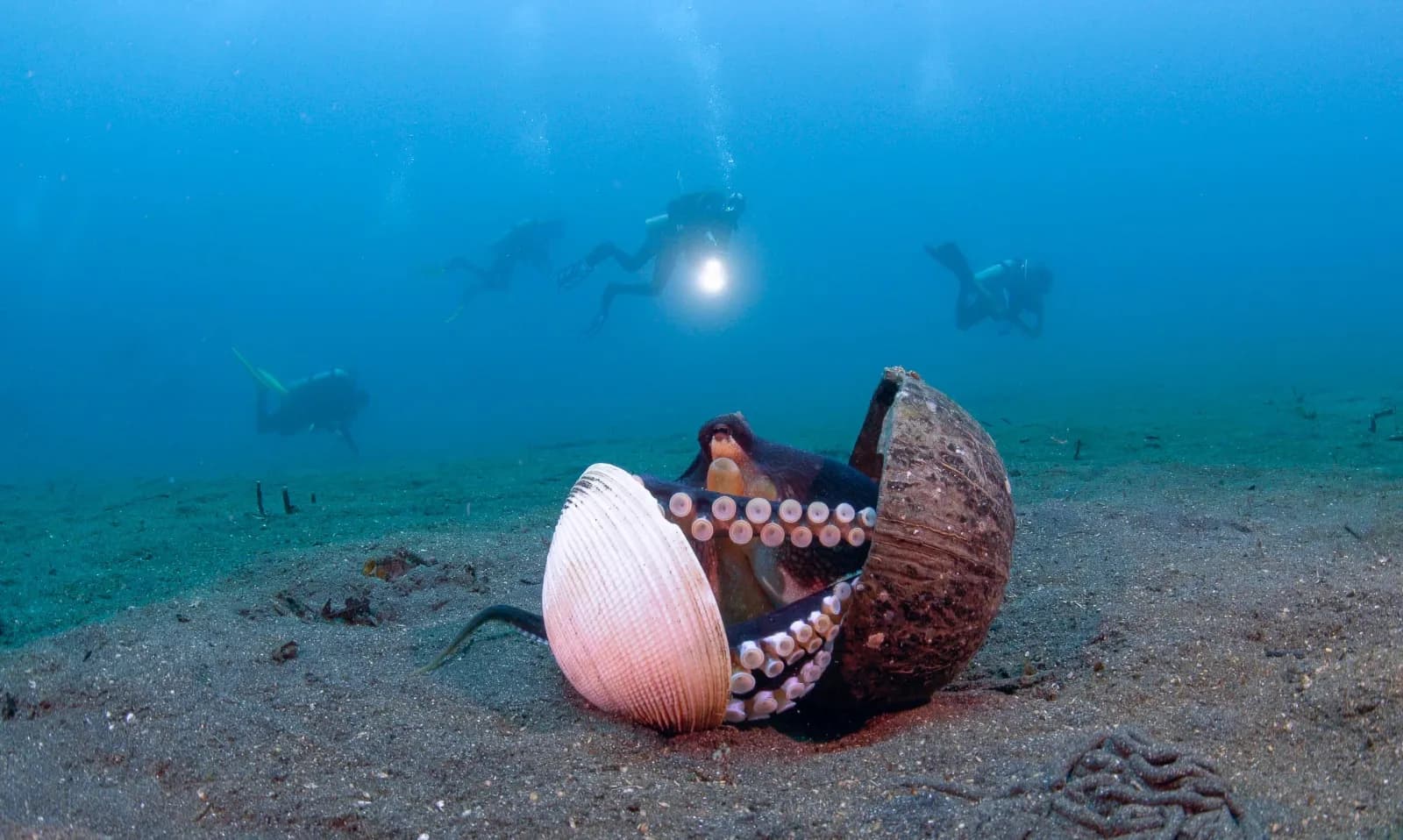
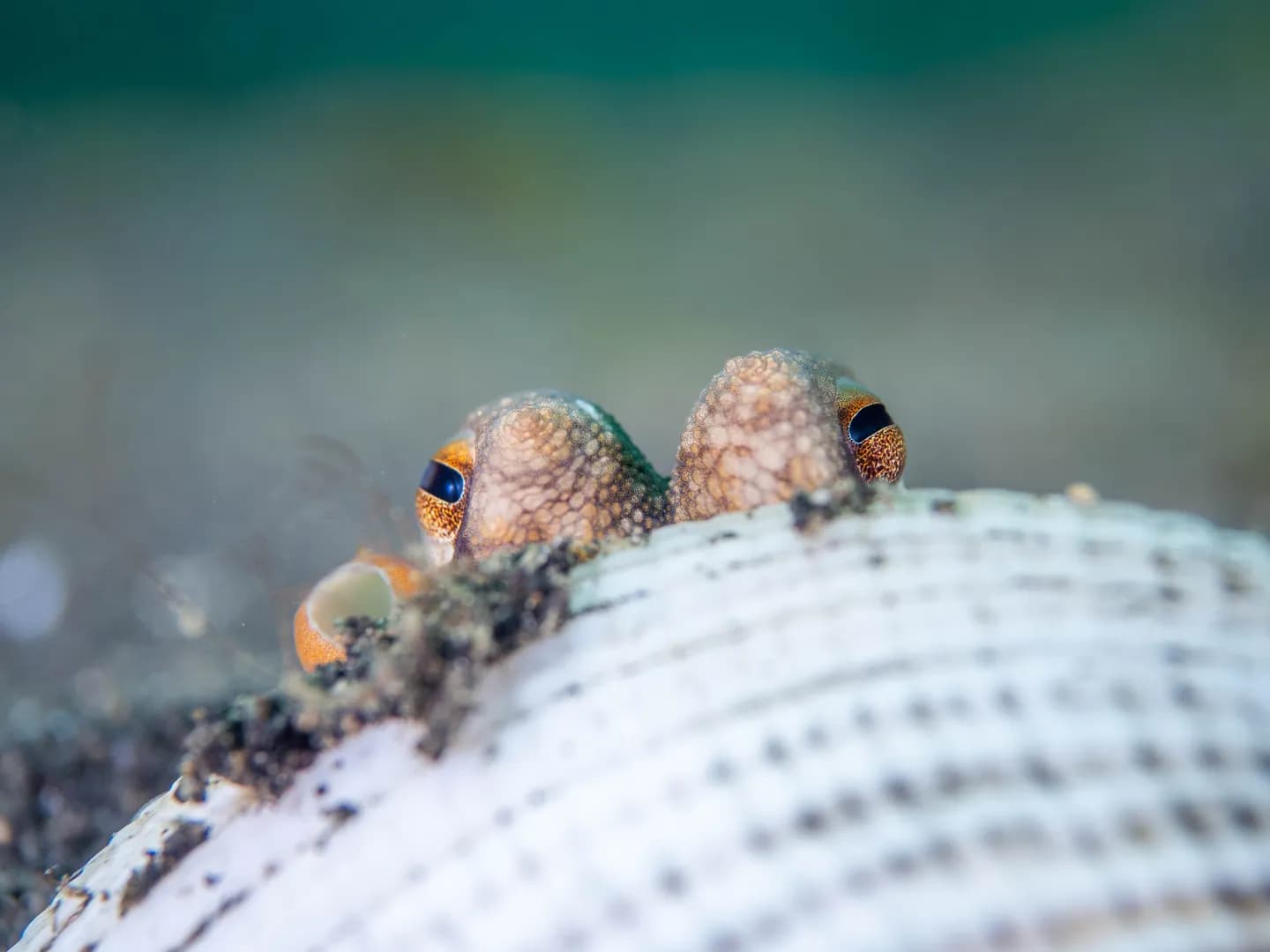
It also adds another dimension to Lembeh's famous critter-diving experience. During the day, you might search the Strait’s volcanic sands for hairy frogfish, mimic octopus, or flamboyant cuttlefish; then, after dark, the search shifts upwards into the water column, where an entirely different community is passing through. In a destination already famous for the weird and the wonderful, where every trip reveals something unexpected, blackwater diving takes things to a whole new level.
Discover Lembeh after dark
At Lembeh Resort, divers can explore a mix of conventional night dives, dusk dives, mandarinfish dives, bonfire diving, and blackwater diving. Blackwater and bonfire dives can be arranged during your stay, and we can recommend the most suitable nights according to local conditions—although both experiences are feasible throughout the lunar cycle, darker periods away from the full moon can produce greater concentrations of plankton.
Our team of expert local guides brings in-depth knowledge to every dive, while groups are kept small to ensure personalized attention. For photographers, the resort's dedicated Photo Center, camera room, equipment rental, and photo-trained dive guides provide additional support before, during, and after the dive.
In a destination famous for the weird and wonderful, blackwater and bonfire diving reveal an even stranger side of Lembeh—one that only emerges after dark. If you’re looking to dive into the unknown, this is an otherworldly experience that’s not to be missed.
Ready to book your own adventure in the Lembeh Strait? Visit our website or get in touch today – our reservations team will be happy to make your stay the experience of a lifetime!